
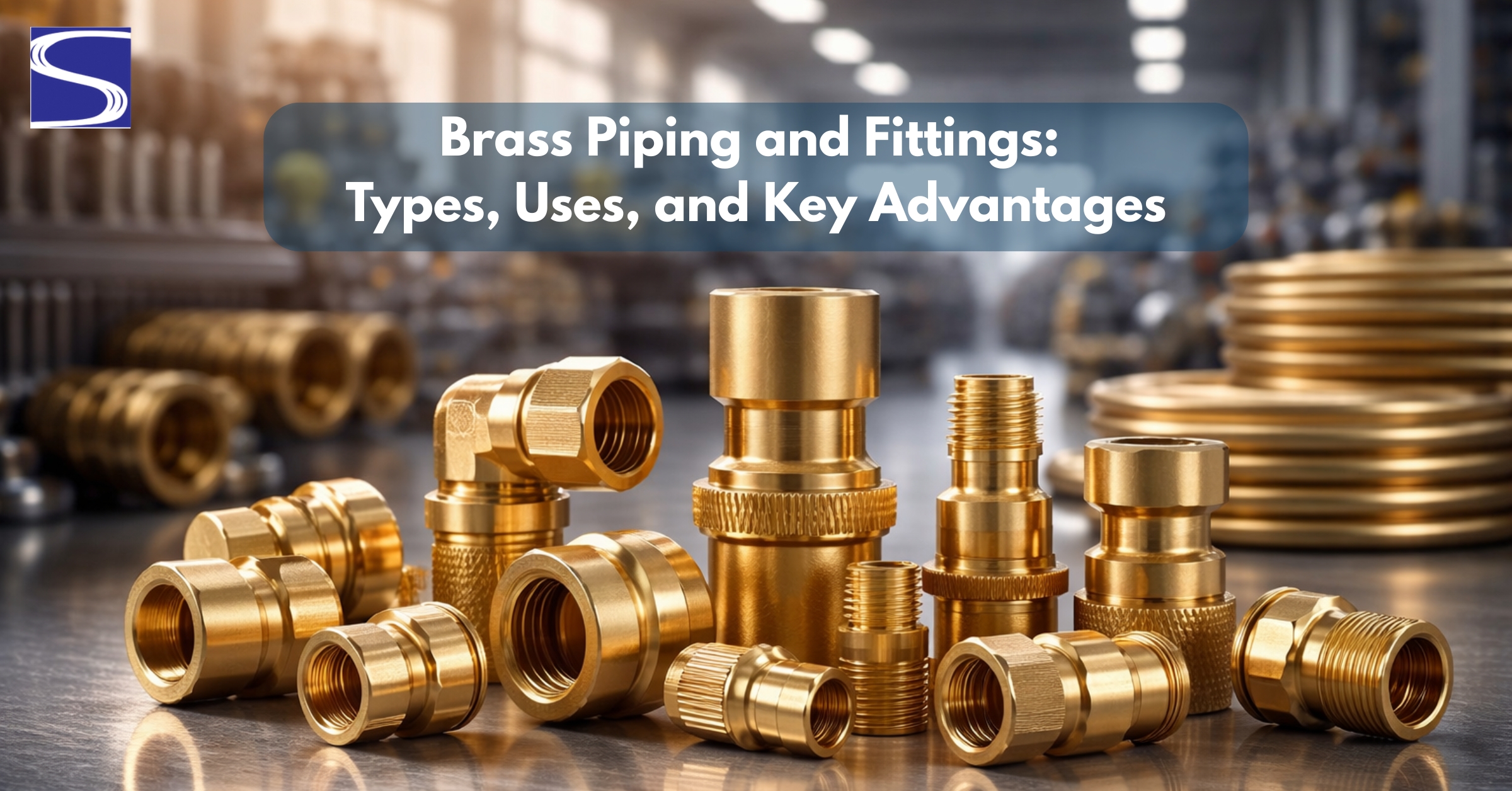
Due to their high level of durability, corrosion resistance, and reliability, brass piping and fittings are of monumental importance to modern plumbing systems and industrial system construction. Brass parts are used in many areas, such as homes, businesses, and factories, to move water, gas, and other fluids quickly and easily. The growing use of brass piping and fittings is due to their high mechanical strength, long service life, and capacity to be used in many different ways.
Introduction to Brass Piping and Fittings
When designing any liquid transportation system (plumbing) and therefore the choice of materials, the safety and reliability of the system are greatly influenced by the components of the system. Use of Brass piping and fittings in construction is an industry standard. This is because of the good balance in terms of the strength of the components of the system, workability (frame of the system) and corrosion resistance. Pressure and temperature can also affect certain materials commonly used as alternatives to brass. This is the reason why the use of brass piping and fittings in domestic and industrial construction became a standard.
Understanding Brass Piping and Fittings
What Are Brass Pipe Fittings?
Brass pipe fittings attach to the end of pipes to connect, control, or change the direction of the system. These control joints help prevent leaking and maintain the flow of the connection. High-quality brass pipe fittings can withstand mechanical and other types of environmental damage long-term.
The importance of brass fittings for plumbing pipes
In the construction of both residential and commercial buildings, brass plumbing pipe fittings are part of the water supply lines and water shut-off valves and connectors. brass plumbing pipe fittings to rust and corrosion, water systems have an increased life span and systems fail. Because both hot and cold water can run through the fittings, they are more of an assurance for the plumbing system.
Types of Brass Piping and Fittings
Common Types of Brass Fittings
There are several types of brass fittings designed to meet different system requirements, including:
- Elbows for turning the pipes
- Bushings for altering a system’s threaded connections
- Reducers for connecting pipes of different sizes
- Nipples for increasing the length of a pipe run
- Tees are for adding a branch to a pipe and allowing flow to be combined or split
These brass fittings can be made with precision to allow the systems to work with less potential for operations to be built without leaks.
Importance of Brass Pipe Couplings in Piping Systems
Brass pipe couplings securely connect two sections of straight pipe. Due to their strength, pipe couplings help maintain the integrity of the pressure in the system.Brass pipe couplings are utilized in plumbing, gas pipelines, and industrial fluid systems where it is very important that they work the same way every time. For electrical and cable management systems, brass cable glands are commonly integrated into industrial installations to secure cables, maintain sealing integrity, and protect systems from dust and moisture.
Main Benefits of Fittings and Brass Piping
Performance and dependability benefits
One of the main reasons for the widespread use of brass piping and fittings is their performance advantages. Key benefits include:
- High resistance to corrosion and chemical reactions
- Strong mechanical properties for pressure handling
- Reliable operation in hot and cold environments
- Leak-resistant threaded connections
- Easy installation and maintenance
- Long operational lifespan
These qualities make brass piping and fittings a preferred material for systems that demand durability and safety.
Applications of Brass Piping and Fittings
Plumbing Applications
Brass piping and fittings in plumbing systems are used in connectors, water supply lines, and valves. Brass plumbing pipe fittings help ensure water that is clean flows while the maintenance requirements are minimal. For residential and commercial long-term use their corrosion and scale buildup resistance made them ideal.Brass pipe fittings are valued for their strength, wear resistance, and ability to perform consistently in demanding environments. In addition to standard fittings, components such as brass sleeves are used to reinforce connections and improve durability in industrial assemblies.
Industrial Applications
Brass pipe fittings are indispensable in the industrial sector for gas distribution and fluid transfer in HVAC and fluid transfer systems. Brass pipe fittings are sturdy and withstand wear and tear. Brass pipe couplings are used for the alignment and stabilization of industrial pipes.
Picking Out Sources Of Brass Pipe Fittings
Factors To Consider When Selecting A Source
Choosing the right supplier is essential for ensuring product quality and performance. Reliable brass pipe fittings manufacturers focus on:
- High brass alloy quality
- Quality control and machining accuracy
- Industry standard compliance
- Custom specification fulfillment
Collaboration with seasoned brass pipe fittings manufacturers ensures reliability and consistency throughout the project.
Importance of Experienced Manufacturers
These manufacturers often have the technical know-how and manufacturing proficiency for the fittings to perform for an extended time. When sealed brass pipe fittings manufacturers are used, buyers are assured that the fittings will give consistent and desirable results.
Why are Brass Piping and Fittings the Best Long-Term Solution?
Brass Piping Durability, Brass Piping Safety, and Brass Piping Sustainability
Brass is one of the best brass piping and fittings options long-term because of its long-term value, sustainability, and durability. Since corrosion is unlikely, and wear and tear is unlikely to happen, the materials can be used for a long time, and it keeps costs down in the long run. Since brass is also recyclable, it is a good material to use, and also the performance is great across the board for all types of brass fittings and brass pipe couplings. Insights into the role of brass components in durable assemblies can be explored further in this detailed reference on Brass Inserts. The consistent performance of brass fittings and brass pipe couplings further reinforces brass as a reliable material across multiple applications.
Conclusion
Brass piping and fittings are still the best and most preferred choice for industrial systems and plumbing. Industrial fittings and plumbing have many brass pieces in their systems, and those pieces perform and last a long time. When businesses and installers work with the best manufacturers and select quality fittings, they are able to achieve the most efficient, safe, and durable piping systems.