
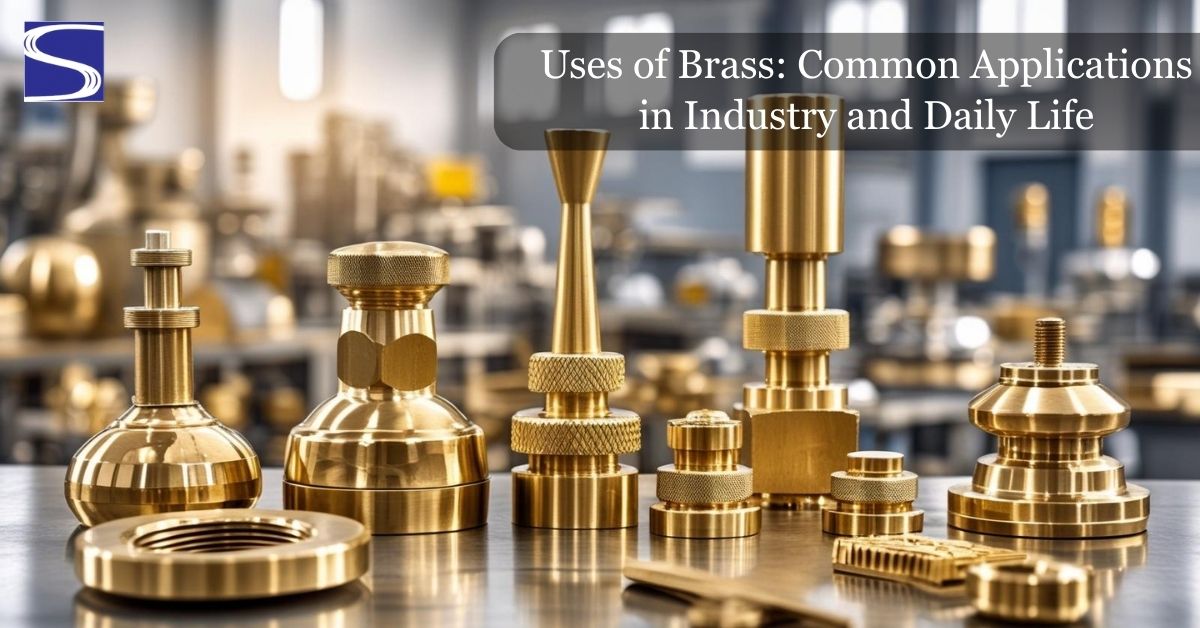
Brass is a highly useful and flexible metal alloy. its durability, resistance to corrosion, and its beautiful look make it a key material for many industries. Knowing its several applications enables companies and customers to understand why it is so highly valued in everyday life and in engineering. The uses of brass in decorative engineering are countless.
Due to the strength and flexibility of brass, engineering industries use brass to help build long-lasting devices. The properties and uses of brass make it ideal for applications that require precision, conductivity, and resistance to wear. All of these characteristics and more is to be further explained in the description of brass. Leading suppliers such as Brass Manufacturers in Jamnagar continue to innovate in producing high-quality brass components for global markets.
What Makes Brass So Valuable?
Brass is primarily an alloy of copper and zinc. The combination creates a material that is strong, easy to machine, and highly resistant to corrosion. These characteristics explain what brass is used for in both industrial and residential settings. Because of its malleability and smooth finish, brass is used for making components that demand dimensional accuracy.
Another important advantage is that brass is used for electrical conductivity and mechanical reliability. Its anti-corrosive nature ensures that the use of brass remains effective even in humid or high-pressure environments. The overall properties and uses of brass clearly demonstrate why it is preferred over many other metal alloys.
Uses of Brass in Industrial Applications
Industrial sectors rely on the uses of brass for efficient functional solutions. Brass is the ideal material as it offers the best combination of strength and machinability for the manufacture of precise components.
Electrical and Electronics
Brass is used in the electrical sector. Brass has excellent conductivity and is therefore used to manufacture terminals, connectors, parts of switchgears and plug pins. This explains the reason what brass is used for in electrical applications — trustworthiness and a long lifespan.
Brass is used for making electrical fittings that need to be corrosion resistant and where the flow of current has to be maintained. Electrical component manufacturing companies are known to source Top-Quality Brass Parts to meet the safety and functionality of the products.
Plumbing and Fluid Systems
Uses of brass in plumbing because it is resistant to corrosion from water and strong enough to withstand the water pressure. The reason brass is used for plumbing systems is its resistance to rust and ability to withstand water pressure.
In the construction of fluid control systems, brass is used to create connectors that are leak proof, and fittings that are compression type. The use of brass in these systems makes sure that they are durable, safe, and control flow in the systems easily.
Automotive and Engineering
The automotive industry also benefits significantly from the uses of brass. Parts of the fuel systems, and fastenings of the radiator are made of brass because it is resistant to heat and easy to shape. When talking about what brass is used for, the fittings of the automobiles and the components of the machines are also common examples.
Because brass is used for making parts that are made with high precision, it is possible to make machines and industrial tools that are able to perform very highly. The uses of brass in the industry enables better use of the tools and also increases the time that the equipment lasts.
Brass Uses in Daily Life
Apart from the industrial use of brass, there are many brass uses in daily life that people may not know about. This includes decorations in houses, offices, and even in the streets because of the strength and the beauty of brass.
Cabinet knobs, door handles, hinges, and locks are all brass uses in daily life The shiny appearance of brass in addition to its lasting qualities makes it a great decorative element for interiors. This is why it is common to see brass in high-end commercial and residential building hardware.
Another example brass uses in daily life are kitchen tools and cookware, especially in older style kitchens. Because brass is used for hygienic and long-lasting utensils, it has remained popular for generations.
Musical instruments such as trumpets, saxophones, and trombones highlight another interesting use of brass. The acoustic properties explain what brass is used for in producing clear and resonant sound. Coins and decorative items further demonstrate the broad uses of brass in everyday environments.
Properties and Uses of Brass Explained
Brass has been used for decorative purposes and coins. These examples demonstrate the wide uses of brass in everyday life.
- Excellent Corrosion Resistance
- High Thermal & Electrical Conductivity
- Good Tensile Strength
- Attractive Appearance
- Good Machinability.
These characteristics directly influence the properties and uses of brass in various sectors. Because brass is used in harsh environmental conditions, it maintains performance without rapid deterioration.
Another reason brass is used in specialized components is its ability to be customized. Varying grades and compositions define specific functions. Those with an interest in material differences can gain a better understanding of how performance is influenced by alloy composition in the document Types of Brass Materials.
The strong relationship between the properties and uses of brass ensures most industries continue to use it. Its use in precision engineering and home decoration illustrates that versatility is unmatched.
Why Brass Remains a Preferred Choice
Across all industries, the emerging need reinforces the longevity of the uses of brass. Because brass is used for making products that are durable and resistant to corrosion simplifies maintenance and increases the product’s lifespan.
From large-scale industrial machinery to simple household fittings, the use of brass continues to expand. It is easy to see that when examining what brass is used for, the alloy most definitely provides a solution to both function and form.
The attributes of ease of machining, dependability and aesthetics underpin industrial creativity and modern lifestyle requirements. Whether considering performance and efficiency in industry or brass uses in daily life, the utility of brass is simply a constant.
Conclusion
Brass’s versatility is a key reason for its prominence as a metal alloy. uses of brass in Electricals, plumbing, musical, and ornamental applications illustrate its durability and efficiency. Its properties mean it is equally suited for tough industrial applications and for simple home uses meaning its use in everyday applications is justified.
As precision engineered parts become a market need, brass’s uses will increase. Knowing what brass is used for is a method to cut through the noise of its technical pros and speak to its utility.