
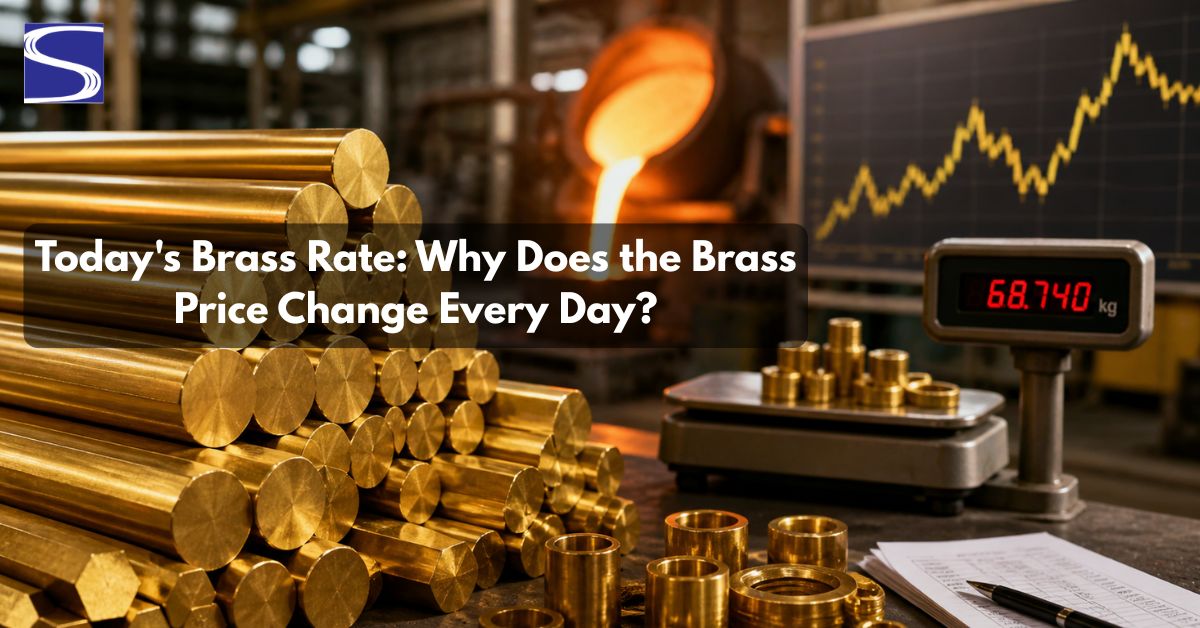
If you checked the brass rate today differently than it was reported last week, then you were right to take note of the change. Brass prices in India change almost every day and constant change for buyers, manufacturers and procurement managers is something that you simply cannot neglect. Whether you are continuously purchasing industrial components or simply operating a small workshop, checking the brass rate today in india is as important as checking the prices of any other raw materials that you consistently procure. This guide breaks down everything you need to know about what price changes, their volatility and other related things.
What Is the Brass Rate Today and How Is It Calculated?
The brass rate today is determined by daily interactions in the global commodity market, local supply and demand, and dealer profit margins. Brass is a metal as a result of a combination of copper and zinc and as a result, determining brass prices requires close attention to the prices of copper and zinc. The brass rate today as determined by metal prices on the international market is then adjusted in local markets to account for logistical costs and demand and supply. Trading brass involves simply quoting brass rate per kg times the trading unit and it is little wonder the prices change so frequently.
5 Key Factors That Affect Brass Rate Today in India
The brass rate today in india are consistent with a pull and push cycle. Knowledge of these factors is valuable when your business requires the mass procurement of items like Brass Precision Parts. This way, you can time your purchases and avoid paying the peak prices when brass is selling. Taking into account the brass rate today could also provide a good barometer for which direction the Indian economy is headed, as the majority of the brass production facilities are located in Jamnagar.
Here are the five main factors that drive daily price movement:
-
Copper and zinc price variation—a change in the availability and pricing of copper will also mean a change in the pricing of brass, which is composed of between 60 and 70% copper.
-
INR and USD value — the pricing of basic metals like brass is only done in USD. This implies that a decline in the rupee against the dollar corresponds to an increase in the pricing of brass.
-
Demand for brass—There is a direct and generally positive correlation of brass pricing and the demand of brass for the production of brass fittings, electrical parts and components like precision parts. This is usually caused by the production order surges in the construction industry and seasonal festivals.
-
Changes in the government’s trade policy—There can be a major change in pricing when the government places renewed copper import or export restrictions on brass, changes how brass is traded in the GST, or changes the policies the government has.
Jamnagar Brass Rate Today: Why It Differs from Other Cities
It is common to see jamnagar brass rate today differing from both Mumbai’s and Delhi’s. When comparing brass rates, consider the geography and manufacturing density. Jamnagar brass rates today can offer significant savings to high volume businesses that source products such as Brass Turned Parts and other precision components from Jamnagar’s manufacturing facilities because Jamnagar accounts for approximately 50% of all brass production in India. Another reason jamnagar brass rate today will differ is that the rates here are more closely correlated to the scrap brass market due to the density of brass manufacturing facilities. Brass rate per kg can actually be seen as more accurate than brass rates in more developed areas because Jamnagar has more manufacturing facilities and a closer correlation to the scrap brass market, which is more volatile than the brass market.
Brass vs Scrap Brass: Which Rate Should You Track?
There is significant differentiation between brass and brass scrap rate today that is seen to vary daily. High-volume firms will typically keep track of more than just the current-day brass prices and will keep track of the current-day scrap prices. Depending on the purpose of the brass and the desired quality, it will determine which type of brass buyers will purchase. There are a number of catalytic Brass Characteristics that such as tensile strength, corrosion, and machining ability.
Brass Scrap Rate Today: What Buyers Need to Know
For many manufacturers, one’s ability to procure raw resources significantly impacts their production costs. Because scrap brass falls in these secondary markets, various denominations exist within India’s secondary metal market. Within India’s market, one can buy scrap brass as Pital No. 1, Pital No. 2, or first-class mixed scrap. The brass scrap rate today fluctuates based on the volume of the collection that enters the Jamnagar market, the severity of the quality of the scrap, and the number of competing buyers for the collection. Amidst numerous competing buyers, the market sharpens the gap between the brass scrap rate today and the typical brass rates.
How to Check Today's Brass Rate in Real Time
For the brass rate updates, monitor the MCX for live copper and zinc prices. Also, you can maintain close communications with the buyers and sellers of brass in Jamnagar who send daily updates on the brass rates. Finally, be sure to track the global copper prices on the London Metal Exchange.
Brass Rate Today Per Kg: Grade-Wise Breakdown
All brass metal is not priced the same. The brass rate today per kg can significantly change based on the exact brass metal alloy that you are seeking. You can purchase various brass prices from the secondary market, but the quality of brass metal will differ and require stronger tolerances. For scrap brass, you can procure the lowest price by purchasing the brass rate today per kg lowest grade, but you will be unable to purchase the scrap brass from the secondary markets.
Frequently Asked Questions
What effect does the brass rate today have due to volatility?
Volatility in brass rate today is partly due to international commodity exchanges trading brass, copper and zinc twenty-four hours a day, seven days a week. Supply disruptions, demand changes, and currency shifts can quickly alter brass rate per kg, as global brass production cannot cease although the international market has an extremely fast-moving supply chain.
Are Jamnagar brass rates today the best in India?
For the most part, purchasers consider the jamnagar brass rate today to offer the best value amongst the offerings from the various Indian city brass rates. However, even the brass rates in India can have better brass value than the Jamnagar Brass rates today, since brass rate today in india could have freight costs and minimum purchase stipulations that could influence the purchaser’s overall cost of brass.
Conclusion
Though seemingly straightforward due to the various brass rate today, they demonstrate the volatility of the market and can move significantly due to supply and demand. For businesses that utilize brass regularly, tracking the brass rate today per kg consistently will allow for better brass procurement and buying opportunities.