
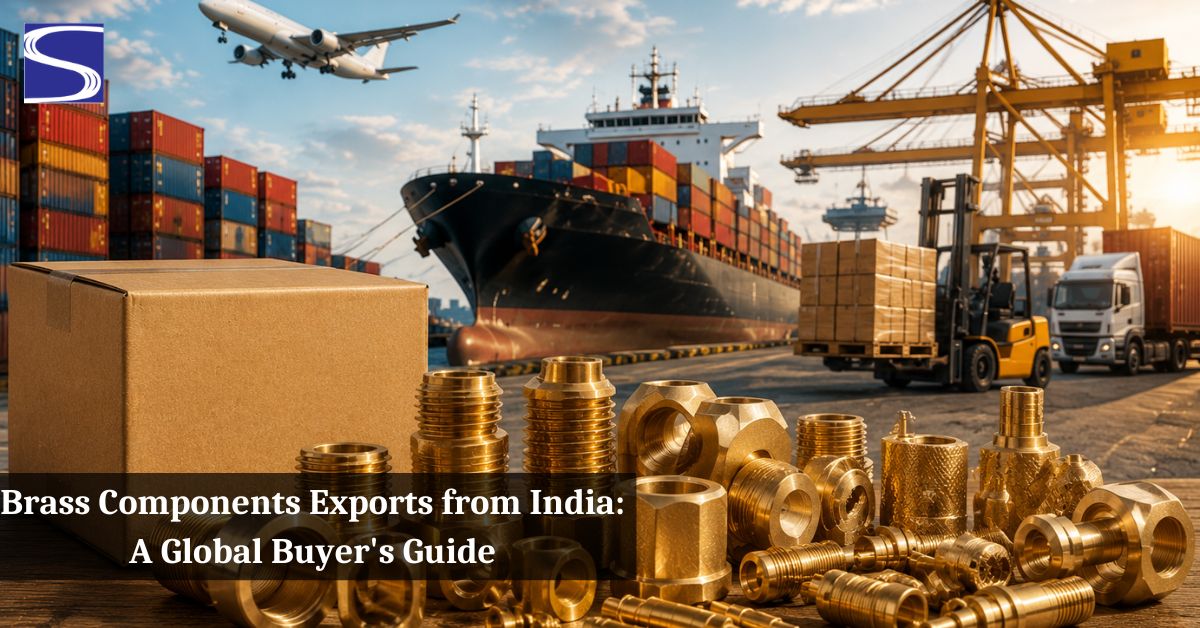
Price is rarely what makes or breaks an overseas sourcing deal. What actually matters is whether the supplier ships on time, holds tolerance batch after batch, and picks up the phone when a spec needs clarifying. That’s the real story behind Brass Components Exports from India, and it’s a big part of why Jamnagar keeps landing on procurement shortlists year after year.
If you’re evaluating an Indian supplier for the first time, or just trying to figure out why this one region dominates the category, here’s what actually matters: the manufacturing base, the product types, and what to check before you sign off on an order.
Why Jamnagar Leads the Market
Jamnagar earned its nickname, the Brass City, the hard way. When people talk about Brass Exporters in India, this region is usually what they mean first. It’s been producing brass hardware for decades, and that history shows up in small ways you wouldn’t expect, like how many machinists in a single neighborhood can eyeball a tolerance before they even measure it.
A few things keep this cluster ahead of everyone else trying to compete:
- Decades of hands-on metallurgical experience with copper-zinc alloys
- Reliable access to raw material at rates that actually make sense
- A concentrated manufacturing ecosystem, so buyers can source multiple product types without hunting across the country
- Workers trained specifically on brass, not generalist machinists picking up a new metal
- Freight and documentation infrastructure that’s been shaped by decades of export volume
Saryu Industries works out of this cluster, across casting, forging, and precision machining. That range matters more than it sounds. A buyer who needs both finished parts and semi-finished stock doesn’t want to be juggling three vendors just to fill one order.
What Are the Components of Brass?
Before you start comparing suppliers, it helps to actually understand the material. Brass isn’t a pure metal. It’s an alloy, and its personality, color, strength, and how easily it machines come entirely from what’s mixed into it.
The two core components of brass are copper and zinc. Copper usually makes up 60 to 70 percent of the mix, with zinc filling the rest. Shift that ratio even slightly and you get a different color, different strength and different machinability. That’s why there isn’t just one “brass,” there are dozens of grades built for different jobs.
Some formulations throw in small amounts of lead, tin, or aluminum too, mostly to improve machinability or push corrosion resistance further. Knowing what are the components of brass in a given batch matters more than most buyers realize going in. Anyone researching exports components of brass should start here, honestly, because the alloy ratio decides almost everything downstream: how the part machines, how it holds up in a marine environment and whether it’s still doing its job in an electrical panel a decade from now.
Types of Brass Components India Exports
India’s brass manufacturing base covers a surprising range of product categories, and Jamnagar in particular has built real specialized capacity around a handful of them. Buyers researching exports components of brass tend to start with one product line, get comfortable with the supplier, and expand from there.
Brass Turned Components
Turned parts come off lathes and CNC turning centers, and they make up a large chunk of what leaves Indian ports. Brass turned components show up in plumbing fittings, electrical terminals, and precision hardware where tolerances genuinely matter, not just on paper.
If you’re sourcing turned parts, ask about batch consistency first. A supplier who holds the same tolerance across a 50,000-piece run is a different operation from one that nails the first sample and quietly drifts by piece 500.
Precision Brass Components
Precision brass components cover a broader category: machined, forged, and stamped parts used in electrical switchgear, automotive fittings, and industrial hardware, often with tighter dimensional control than standard hardware brass.
Quality control isn’t optional here. Look for suppliers who run dimensional checks on a sample percentage of every batch, not just the first article approved and never checked again.
A Note on Terminology
Some buyers use the term Brass Precision Parts more or less interchangeably with precision components, and the split mostly comes down to industry habit: electrical and instrumentation buyers tend to say “parts,” while automotive and industrial buyers usually say “components.” Either way, the manufacturing requirements underneath don’t change: consistent alloy composition, controlled tolerances, and production records you can trace back if something goes wrong.
Choosing the Right Brass Components Manufacturer
Not every brass components manufacturer operates at the same level, and comparing them on price alone is a good way to get burned.
A few questions worth asking before you sign off on a supplier:
- Can they share test certificates for alloy composition on past shipments?
- Do they manufacture in-house or hand off critical steps to third parties?
- What’s their actual track record on delivery timelines for international orders, not just what they claim?
- Can they handle a small prototype run and a full production volume without treating one as an afterthought?
A supplier running in-house casting, forging, and machining tends to be more consistent than one that outsources chunks of the process. Fewer handoffs usually means fewer surprises at the finished-product stage, which matters most once Brass Components Exports move in large, repeat volumes rather than one trial shipment.
Here’s a practical example. Three suppliers quote a buyer for brass electrical terminals at nearly identical prices. The real difference shows up at the sample stage: one factory sends back a sample matching spec on the first try and another sends something close but slightly off on wall thickness and needs two more rounds to fix it. That gap in responsiveness tends to predict how the full order goes, so it’s worth weighing more heavily than the lowest quote.
The Brass Components Exports Process from India
Getting parts from a factory floor in Jamnagar to a buyer’s warehouse overseas follows a fairly fixed sequence. Knowing the steps helps buyers set realistic timelines and catch delays before they become a real problem.
- Order confirmation and technical specification sign-off
- Raw material procurement and alloy verification
- Production run with in-process quality checks along the way
- Final inspection and documentation, including certificates of origin and test reports
- Packaging suited to the shipping mode and the destination’s climate
- Customs clearance and freight booking
- Shipment tracking through to the port of arrival
Most delays in Brass Components Exports come down to paperwork, not production. A wrong HS code or a missing certificate can hold a container at customs for days while a buyer keeps calling for updates. A supplier with a tight documentation process saves real time and real stress.
Building a Long-Term Sourcing Strategy
For buyers building an actual Brass Export Guide for Global Business Growth rather than placing a single order, it’s worth treating this whole thing as repeatable rather than a one-off purchase. That shift changes how you evaluate suppliers. Repeat orders reward consistency, not the lowest quote on a spreadsheet.
Buyers who do well with Indian sourcing tend to start small: place a trial order, check quality against their own specs, then scale up. It’s slower than jumping straight to full volume, but it catches problems while the stakes are still low, not after a warehouse full of parts turns out wrong.
Conclusion
Brass Components Exports from India rest on a manufacturing base that’s had decades to mature, especially around Jamnagar. Whether you’re sourcing turned parts, precision components, or standard hardware brass, the fundamentals don’t really change for anyone comparing exports components of brass: check the alloy composition, verify the process, and start with a trial order before you commit to volume.
Saryu Industries works across casting, forging, and precision machining out of its Jamnagar facility, supplying buyers who need both reliability and technical consistency in every shipment. If you’re still comparing suppliers, a small trial order remains the simplest way to see how a factory actually performs, well before a full container is riding on it.
Frequently Asked Questions
Decades of metallurgical experience, a concentrated manufacturing cluster, and labor trained specifically on brass rather than metals in general.
Copper and zinc, usually in a 60-70 percent copper to 30-40 percent zinc ratio, sometimes with small additions of lead or tin.
Ask for alloy test certificates, check whether production happens in-house, and request references from past international buyers.
A commercial invoice, packing list, certificate of origin, and quality test reports are the baseline, with extras depending on the destination country’s rules.
Yes, almost always. A trial order lets you check quality and communication before committing to a much larger volume.