
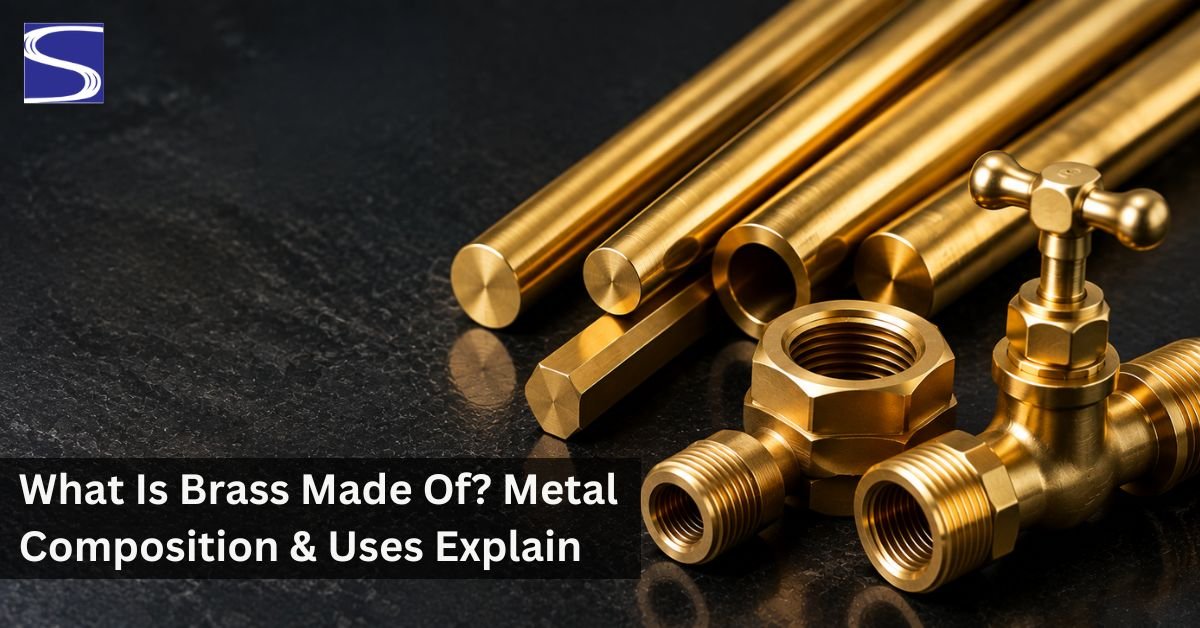
Ask a buyer what brass actually is, and most say “some kind of copper thing.” Fair enough. So what is brass made of? It’s copper and zinc melted together in a specific ratio, chosen depending on whether you need strength, machinability, color, or corrosion resistance. Brass doesn’t occur in nature the way copper or iron ore does. Someone decides the ratio, and that decision shapes everything downstream.
Put simply, brass made up of two metals, copper and zinc, in proportions that shift depending on the job. More copper gives a warmer, more golden alloy. More zinc makes it harder and cheaper, though less forgiving to machine. That range is why brass ends up in plumbing fittings, brass instruments, door hardware, and precision-turned parts that never leave a factory floor.
What Is Brass Made Of? Core Composition Explained
For engineers and procurement teams, what is brass made of isn’t a trivia question. It determines sourcing decisions, cost, and how the part holds up years down the line. Commercial-grade brass is made up of roughly 60 to 70 percent copper and 30 to 40 percent zinc, though specific grades push that ratio around. Copper and zinc trade on separate markets, so the ratio a supplier uses directly affects landed cost, which is why buyers keep an eye on Brass Rate Today before locking in bulk orders.
The Role of Copper and Zinc in Brass
Copper does most of the heavy lifting. It’s what gives brass its resistance to corrosion, its conductivity, and the ability to bend, draw, or machine without cracking. Copper makes up the majority of the alloy by weight, and zinc is added to push up hardness and tensile strength without turning it brittle. Some grades throw in a pinch of lead, tin, or aluminum too, usually to improve machinability or seawater resistance. It’s a small addition, but often the difference between a general-purpose alloy and one built for a specific job.
Brass Constituents and Their Properties
Each element pulls its own weight, which is why two brass grades that look identical on a spec sheet can behave differently under load. Knowing what is brass made of at this level helps buyers pick the right grade instead of ordering “brass” and hoping for the best. Understanding brass constituents also gives procurement something concrete to compare across suppliers, rather than relying on price alone.
A few of the properties tied directly to brass constituents:
- Corrosion resistance – the copper content keeps rust and oxidation at bay, even in humid or coastal conditions
- Machinability – zinc, along with trace lead, makes the metal easier to cut, drill, and turn on a lathe
- Electrical conductivity – higher copper content means better conductivity, useful for electrical fittings
- Malleability – the alloy shapes, extrudes, and casts cleanly without cracking
- Acoustic quality – certain copper-zinc ratios are why brass instruments sound the way they do
What Is Brass Made Up Of? Standard Composition Table
Once you know brass is made up of set, standardized ratios rather than whatever a mill has on hand, sourcing gets far less confusing.
Table: Brass Made Up Of – Standard Composition by Grade
| Brass Grade | Copper (%) | Zinc (%) | Common Use |
| C260 (Cartridge Brass) | 68–72% | 28–32% | Fittings, ammunition casings |
| C360 (Free-Cutting Brass) | 60–63% | 35–37% | Precision-turned components |
| C280 (Muntz Metal) | 59–63% | 37–41% | Marine hardware, condenser plates |
| Red Brass | 85–90% | 5–15% | Plumbing, decorative fittings |
Common Brass Grades Used in Manufacturing
Which grade a manufacturer picks depends on what the part has to survive. Free-cutting brass gets a small dose of lead so it produces short, clean chips on a high-speed lathe instead of long stringy ones that jam the machine. That’s why it’s the default choice for precision-turned industrial parts.
How Brass Is Made: From Raw Metal to Alloy
Knowing how brass is made explains why quality control can’t be an afterthought. Every stage, from raw copper and zinc to final finishing, affects the outcome. Suppliers like Brass Precision Parts run tightly controlled melting and casting processes so each batch lands close to the target ratio.
Casting, Extrusion, and Machining Process
How brass is made comes down to a handful of stages, and rushing any one of them shows up later as a quality problem.
The rough sequence looks like this:
- Melting – copper and zinc go into a furnace at a controlled temperature
- Alloying – the mix is checked and adjusted to match the target grade
- Casting or extrusion – molten brass gets shaped into billets, rods, or bars
- Rolling or drawing – material gets refined further into sheet, wire, or tube
- Machining – parts are turned, drilled, or milled down to exact tolerances
Applications of Brass Across Industries
Once you understand what is brass made of, it’s no surprise the same alloy shows up in a bathroom faucet and a marine valve. Brass turns up across plumbing, electrical, automotive, and precision engineering work because it strikes a balance most alternatives can’t: strong, easy to machine, resistant enough to last outdoors or underwater. Its non-sparking, non-magnetic nature also makes it a go-to in industrial and marine settings with strict safety rules. Buyers sourcing internationally compare suppliers on consistency more than price, since a slightly off copper-zinc ratio can throw off tolerances across a production run.
Why Manufacturers Prefer Brass Components
Brass parts cost less to maintain over time because the alloy resists tarnish and wear better than untreated steel. Combine that with how easily it machines, and it’s clear why brass stays the default for fittings, valves, connectors, and turned parts headed for export. If you’re after consistent, export-grade output, working with a supplier known for High-Quality Turned Metal components is worth the extra vetting, since composition consistency separates a reliable supplier from a risky one.
Conclusion
So, what is brass made of, in plain terms? Copper and zinc, mixed in a ratio chosen to suit the job, sometimes with a trace element thrown in for good measure. Once you understand the constituents, specifying the right grade for a plumbing fitting versus a precision-turned part stops being guesswork. Buyers who get this are in a stronger position to negotiate, spot a bad batch early, and avoid quality surprises that show up months into a contract.
FAQs
Copper and zinc, usually in a range of 60–70% copper to 30–40% zinc.
Mostly just those two. Some grades add small amounts of lead or tin for specific properties.
Yes. Copper and zinc trade on separate markets, so the ratio used directly changes the alloy’s cost.