
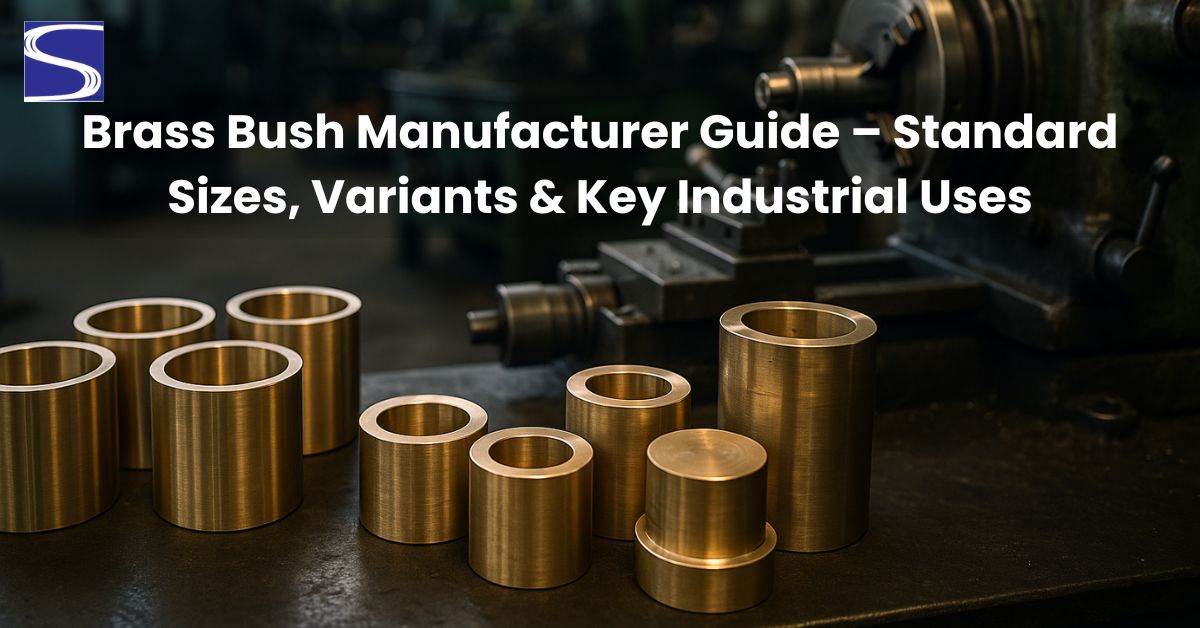
Bushes made from brass are crucial components that are incorporated in the mechanical, electrical, plumbing, and industrial sectors. They serve to relieve the friction generated by the contact between the moving machine elements, which improves the overall machinery efficiency and increases the lifespan of the pieces. Collaborating with an adept brass bush manufacturer means that all the components will be tailored to the exact specifications of size, materials, and performance attributes.
A brass bush normally functions as a bearing, spacer, or support sleeve in the rotating and sliding assembly of machinery. Brass’s easy machining, strength, and resistance to corrosion make it a preferred choice among engineers. Leading brass manufacturers in india continue to refine these components with better precision and durability. This document will concentrate on what brass bushes are, why sizing them right is crucial, and the varying applications across different industries. More specifically, it focuses on bush length, outside diameter, and the standard measurements used in brass bushes, along with their versatile applications in modern manufacturing.
What Is a Brass Bush?
A brass bush is a cylindrical component made of metal that is designed to hold rotating shafts or reduce friction between moving parts in machinery. The principal functions include minimizing wear caused by continuous friction, improving alignment, and preventing metal components from making direct contact. A trusted brass bush manufacturer in Jamnagar typically designs these bushes with high precision to ensure long-term performance in demanding industrial environments.
Types of Brass Bushes
- Solid Brass Bushes: Most Commonly Used in General Machineries and Equippments.
- Flanged Brass Bush: Best suited for use cases that need an axial load support.
- Threaded Brass Bush: Utilized in electrical fittings such as switches and conduit boxes.
- Knurled Brass Bush: Provides enhanced grip in situations where a press-fit installation is required.
- Customized Brass Bushes: Crafted according to engineering specifications for niche design needs.
Every reputable brass bush manufacturer provides a variety of offerings to accommodate the specific needs of an industry.
Why Choosing the Right Brass Bush Manufacturer Matters
The Performance of a brass bush is highly dependent on a number of important technical aspects such as:
Accuracy in Machining & Sizing
Accurate fit and snug tolerances in the bush are important for seamless rotation and decrease in friction.
Grade of Brass Used
Brass used needs to be from premium grades such as:
- CZ121
- C36000
- High-tensile yellow brass
Plating or Coating Options
Depending on the use, bushes may need nickel plating, chrome plating, or tin coating.
Production & Export Capability
A reputable brass bush manufacturer is expected to handle bulk orders and to do so in a timely manner for custom production.
Certifications
Quality assurance is a function of a manufacturer’s industry certifications, e.g. ISO, ROHS, etc.
Brass Bush Sizes Overview
Each use is unique and will need a specific fit, which is why it is important to understand sizes available.
Defined By Three Key Measurements
- Inner Diameter (ID) – Shaft rotation
- Outer Diameter (OD) – Housing or bore fitment
- Length – Defines the area of contact and the stability
Factors Affecting Size Selection
- Load or pressure conditions
- Rotational speed
- Required lubrication
- Temperature and environment
Custom vs. Standard
While many sectors utilize standard size brass bushes, custom machining is often needed for OEM applications.
A top brass bush manufacturer sells both with reliable availability.
Brass Bush Standard Sizes (Most Common Dimensions)
Below are the most brass bush standard sizes in different fields.
Standard Inner Diameter (ID) Options
- 6 mm
- 8 mm
- 10 mm
- 12 mm
- 15 mm
- 20 mm
Standard Outer Diameter (OD) Ranges
- Electrical and automotive applications: 12 – 30 mm
- Pumps and machinery: 25 – 60 mm
Length Variations
- Short bushes: 8 – 15 mm
- Medium bushes: 20 – 40 mm
- Long bushes: 40 – 80 mm
Why Standardization Matters
Standardized sizes and dimensions are key to lowering production costs, increasing compatibility, and providing seamless maintenance across industries.
A trustworthy brass bush manufacturer will store significant quantities of these sizes to decrease lead times.
Types of Brass Bushes (Variants)
A modern brass bush manufacturer typically offers:
- Solid Brass Bush
- Flanged Brass Bush
- Knurled Brass Bush
- Threaded Brass Bush
- Hex Brass Bush
- Custom-Machined Brass Bush
Every design offers different ones: different load ratings, fit styles, and installation requirements.
Key Industrial Uses of Brass Bushes
The versatile brass bush is a key element in numerous industries and its bush showcases the reasons why.
Automotive Industry
Used for:
- Steering columns
- Gear shafts
- Suspension components
- Engine and transmission parts
Electrical & Electronics
Applications include:
- Switchgear assemblies
- Motor housings
- Earthing systems
- Electrical contact parts
Plumbing & Piping
Found in:
- Valves
- Faucets
- Water pumps
- Sanitary fittings
Machinery & Equipment
Widely used in:
- Gearboxes
- Industrial rollers
- Conveyor systems
- Hydraulic equipment
HVAC Systems
Installed in:
- Compressors
- Blowers
- Motors
Marine & Offshore
Corrosion resistant brass bushes to saltwater make them perfect for use in Marine grade machinery.
Aerospace & Defence
Used when high accuracy, durability, and a high strength to weight ratio is required.
Supplying companies to these industries must meet very high standards in quality and tolerances for all brass bushings, especially when their product range also includes precision components like Brass Terminals.
Benefits of Brass Bushes Compared to Other Materials
- Better corrosion resistance than mild or carbon steel.
- More durable and temperature-resistant than plastics.
- Excellent machinability for complex designs.
- Long service life due to natural lubricity.
- Ideal for high vibration and high-load environments.
How to Select the Right Brass Bush Size for Your Application
When deciding brass bush sizes, engineers must evaluate.
- Load and pressure rating.
- Speed and rotation.
- Operating temperature.
- Fit tolerance (press-fit or clearance fit)
- Environment (water, chemicals, dust, vibration)
Accurate selection ensures enhanced performance and longer life of the equipment.
Custom Brass Bush Manufacturing: When Do You Need It?
Custom manufacturing is needed when.
- Standard sizes do not fit
- The machine requires special grooves or lubrication pockets
- OEM components need unique tolerances
- Prototyping or reverse engineering is required
- Threading, knurling, or hex machining is needed
A highly capable brass bush manufacturer can provide custom dimensions, specialized designs, and material variations according to customer drawings.
Conclusion
Brass bushes are needed in the automotive, electrical, plumbing, HVAC, industrial, and marine industries. It is important for these industries to understand standard sizes in brass bushes and the different variations available in the market. This helps them select the component that will deliver long-term performance and aligns perfectly with the need for Reliable Fastening Solutions across critical applications.
Having the right brass bush manufacturer who gives you the best quality engravings, durability, and on-time delivery, whether off-the-shelf or custom-engineered bushings, is critical.