
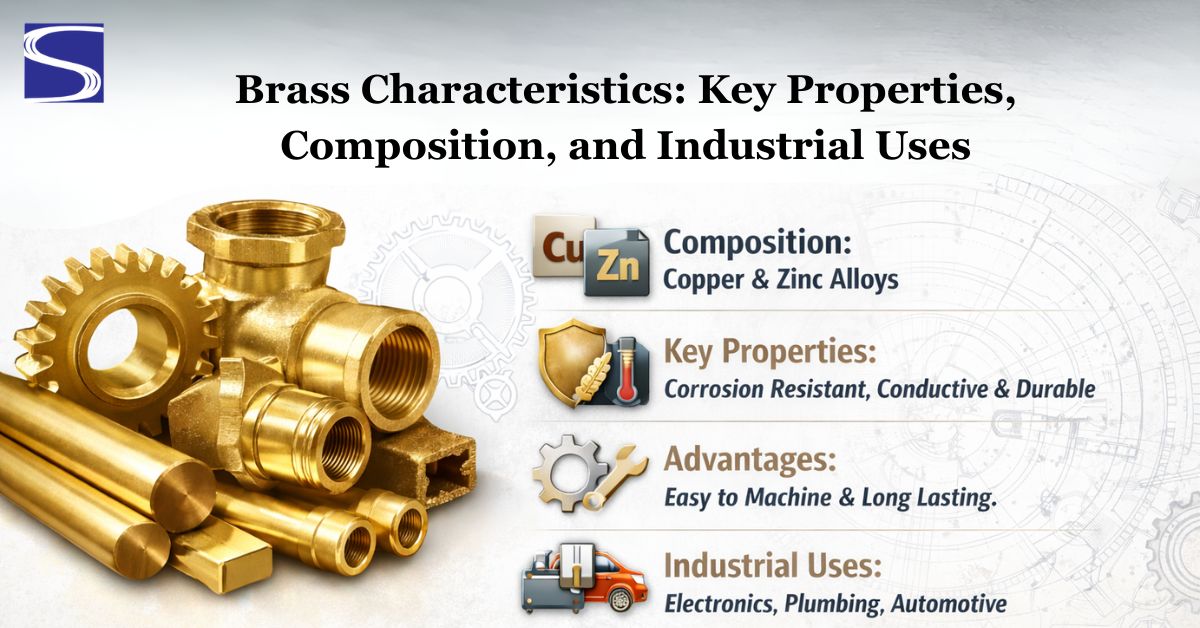
Brass is made up of a mixture of Copper and Zinc, and is one of the most popular and abundant types of alloys used in all types of engineering and construction work. Its resistance to corrosion, and a warm golden color, make it valuable in a number of industries including electrical, plumbing, auto, and decorative. Knowing the physical and mechanical brass characteristics is essential to helping designers and engineers select the most suitable material to use in their work.
In modern engineering, and construction, brass is a highly adaptable and dependable material, allowing it to find applications in virtually every part of the planet.
Understanding Brass Composition
There is a clear relationship between the value of brass density and alloy composition. Therefore, before discussing applications, it would be best to first clarify what influences the value of brass metal density and how it varies.
Standard Brass Density Values
Copper and Zinc bind together to form an alloy in which copper is usually the main constituent. Zinc is valuable in the alloy because it increases the strength and facilitates the ease of machining on it. In combination with copper, zinc provides a combination of characteristics for brass that is highly desirable for industrial fabrication.
Different types of brass alloys are created by adjusting the copper-to-zinc ratio. Additional elements such as lead, aluminum, or tin may also be included to enhance performance. These variations influence the characteristics of brass, allowing manufacturers to produce components that meet specific mechanical and environmental requirements.
Strength, workability, and corrosion resistance contribute to the overall value of brass and its usefulness across a range of industries.
Key Brass Characteristics
The value of brass in engineering and production is supported by a number of core brass characteristics that enable it to perform reliably in extreme conditions.
Corrosion Resistance
The core brass characteristics that contribute to its corrosion resistance. As brass does not rot, it is ideal for plumbing systems, marine equipment, and outdoor hardware.
Excellent Machinability
Brass is known for its exceptional machinability. This allows manufacturers to produce components to a high degree of accuracy with the least amount of work. This ultimately streamlines the production process.
Electrical and Thermal Conductivity
Perhaps most important among brass characteristics is its reasonably good electrical and thermal conductance. Therefore, it is ideally used for electrical connectors, terminals, and switchgear components that demand constant and stable flow of current.
Durability and Strength
The characteristics of brass also include strong mechanical performance. This means that brass components can be relied upon to maintain their structural integrity when subjected to high pressure, mechanical stress, and vibrations.
Attractive Appearance
Most of all, brass gives an exceptional golden color. For this reason, it is appreciated in decorative elements of architecture, furniture fittings, and in lighting.
Brass Properties and Uses in Industrial Applications
Understanding the brass properties and uses in industry helps in understanding why brass is so widely used in so many different industries. Its strength, resistance to corrosion and ease of fabrication make it a highly desirable material.
brass is used for manufacturing valves, plumbing fittings, electrical connectors, fasteners and precision components. These parts must be reliable and long lasting; brass is the material of choice.
Some industries where brass is used for critical applications include:
- Electrical and electronics manufacturing
- Plumbing and fluid control systems
- Automotive and engineering equipment
- Marine and shipbuilding industries
- Decorative architectural hardware
Brass is of great importance in contemporary industrial manufacturing and its benefits are many.
Advantages of Brass in Manufacturing
The advantages of brass make it a highly desirable material for making precision parts. Its choice by engineers is mostly because of its good combination of mechanical properties with ease of manufacturing.
Key advantages of brass include:
- Great resistance to corrosion and damage from the environment
- Great machining capabilities
- Good conduction to be able to be used for electricity
- Can be Easy formed
- Long lifespan and is easy to maintain
These advantages of brass allow manufacturers to create durable parts for the many industries that require reliable service and high quality.
Brass Manufacturing and Global Supply
When considering manufacturing of components of brass, India is one of the leading countries. Brass components manufactured in places like Jamnagar located in the state of Gujarat is known for its quality and is served to industries all over the world. Experienced Brass Manufacturers in Jamnagar are the service providers for precision engineered components for electricity, plumbing, and engineering.
Manufacturers in Jamnagar are more efficient in producing brass parts like connectors, fittings, and fasteners that are custom made and compliant to the International standards. Their expertise ensures that the best brass properties and uses are fully utilized in high-performance applications.
With their machining technology and quality control, brass manufacturers are able to provide excellent components to all parts of the world.
Industrial Applications of Brass Components
With its unique set of brass characteristics and excellent flexibility, the alloy is able to be used in many different parts of technology. Its high strength, high conduction, and resistance to corrosion makes the alloy fit for a number of different purposes.
Some common applications where brass is used for include:
- Electrical terminals and connectors
- Plumbing fittings and valves
- Automotive bushings and mechanical components
- Decorative and architectural fittings
- Parts for precision engineering
Because of the durability that brass offers, manufacturers can make either purely functional or decorative components.
Engineering manufacturers need to understand the fine details of the properties of brass to know what the correct choice of material for various industrial needs is. For more on these characteristics, refer to the guide on Brass Properties.
Growing Global Demand for Brass Components
The need for brass components will continue to be on the increase as the various types of industries develop. Brass offers the durability and reliability that are critical attributes in the materials used in the developing infrastructures, electrical, and renewable energy systems.
The need for new and improved brass properties and uses has become a focus for many manufacturing industries. Advanced machining technology has made it possible to manufacture intricate and precise components that meet international standards.
Quality brass parts are crucial for dependable solutions in the engineering sectors of various industries. For example, precision-engineered brass components are aiding industrial development in several fields, as detailed in the article on Brass Components for Global Industries.
Conclusion
To conclude, brass must be used in a variety of applications due to its unique brass characteristics, including outstanding resistance to corrosion, machinability, durability, and conductivity. Moreover, brass’s unique combination of strength and adaptability means that in a variety of applications like plumbing, automotive, and decorative, It performs the required task with great reliability.
With the ever-growing demand of the world for solid and reliable engineering materials, the ability of brass in industrial manufacturing will be of utmost significance in the years to come.
Brass will remain a crucial material in the engineering and manufacturing sectors of contemporary society because of its many precision parts and ornamental fittings.