
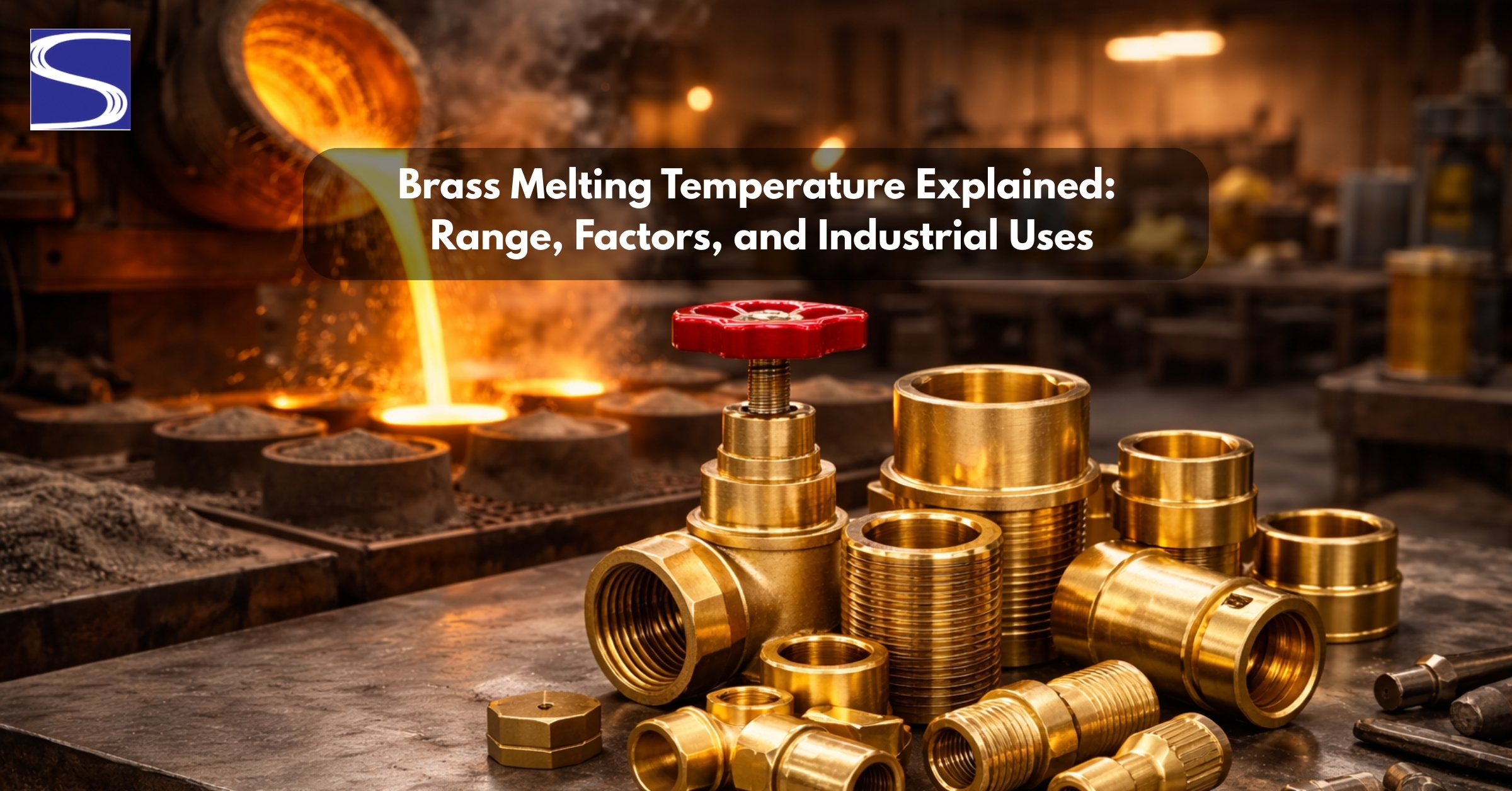
Brass is one of the easiest alloys to work with, and it is also very resistant to corrosion and long-lasting. This is why it is so often used in engineering and manufacturing. Brass is often used for electrical fittings, plumbing parts, decorative items, and mechanical assemblies. While there are many factors to consider optimizing the performance of the components being manufactured, one of the most important is the brass melting temperature, especially with respect to the casting and machining of the components. Optimizing the temperature of heat treatment is essential for engineers designing reliable mechanical assemblies, so it is important for engineers to have a thorough understanding of the factors affecting brass temperature.
The brass melting temperature also relies upon its alloy composition, most notably the ratios of its two principal elements, copper and zinc. An alloy is a combination of metals; therefore, brass may not be considered a pure metal. This results in a greater degree of melting temperatures, which provides the manufacturer with the opportunity to shape the brass alloy for the creation of a variety of components.
What Is the Brass Melting Temperature?
The normal brass melting temperature is between 880 and 940 degrees Celsius, however the exact melting point of a brass alloy depends on how much zinc and copper it has. It is safe to say that the melting temperature of brass alloys is between 900°C to 930°C, as it provides a good range and is likely repeatable for a casting and forming process.
The commonly referenced brass melting point is approximately 930°C (1706°F). However, the melting point of brass metal may shift slightly based on alloying elements or production conditions. Engineers often evaluate the brass melting temperature carefully when designing parts that require precision casting or heat treatment. During the production of parts such as connectors and Brass Insert components, controlling the melting range and heating conditions becomes essential to maintain structural accuracy and durability.
Brass Melting Point in Industrial Applications
When the industry produces connectors, fittings, valves, and mechanical parts, they use the melting point of brass to conduct their operations with the desired uniformity. The brass melting temperature of the brass alloy helps the manufacturers to obtain melting of the alloy with optimum spoiling of the alloy’s mechanical properties.
The solidus and liquidus of brass metal being close means that it is possible to melting temperature of brass engineering industries for safe and easy casting of parts with intricate details that are often required to be fluid in their functionalities.
Factors Affecting Brass Melting Temperature
One of the many determinants for the brass melting temperature is the specific alloying composition for molten brass; the rest is attributed to the means of production. Many manufacturing processes, such as Brass Casting rely on accurate temperature control to ensure the molten alloy fills molds properly and forms high-quality industrial parts.
Alloy Composition
The primary factor that affects the melting temperatures of brass alloys is the composition of copper and zinc and their respective proportions. Increased copper content is said to raise strength while only marginally increasing the brass melting point. On the other hand, changes and variations to the content of zinc are said to raise and lower the melting range and the mechanical or physical property.
Alloys of brass usually contain zinc and copper, and may also contain additional constituents. These could include lead, tin, or aluminum. While these constituents may raise the machinability and the resistance to corrosion, they may also affect the melting point of brass metal and the thermal properties of the alloy and/or the metal in which brass is a constituent.
Key Factors That Influence Brass Melting Temperature
- Copper-to-zinc ratio in the brass alloy
- Heat and cooling conditions during manufacturing
- Presence of lead, tin, and other alloying elements
- Type of brass alloy used for industrial applications
- Heating speed and cooling conditions during production
Manufacturing Conditions
In casting, forging, and extrusion of brass, lack of controlled heating to the melt range of the alloy is said to result in poor or unusable quality. Even during the brass heating, the melting range is determined.
The optimal heating of brass allows for uniform melting of the material and consistency of the structure. Defects can also occur, and the material can be weakened if heating is uncontrolled. Therefore, the quality of the manufactured items is directly related to the brass temperature of the quality brass heating.
Brass Heating and Thermal Behavior
The response of brass to heating is one of the most important factors to consider in industrial manufacturing. The flow of the alloy during the melting and shaping processes is significantly affected by the brass melting temperature alloy.
Importance of Controlled Brass Heating
It is important for manufacturers to have accurate brass heating to ensure that the desired temperature is attained without damaging the alloy. Controlled heating of the brass provides the advantages of uniform melting of the brass, prevention of excessive oxidation and changes in the structure.
Also, the controlled brass temperature during melting allows for the alloy to retain its mechanical strength and corrosion resistance post solidification. This process, combined with other factors, explains the popularity of brass in precision engineering.
Industrial Heating Techniques
Industries use some methods in heating to achieve the specific melting temperature of brass, including the following:
- Cost-effective bronze melting induction heating
- Electric furnaces for Industrial process control
- Gas-fired furnaces in metal casting
- Systems of temperature control for heating to a range of desired temperatures
- Heating processes automated for mass production
Such systems enable manufacturers to slowly adjust temperature to reach the desired melting temperature of brass. The molten alloy can then be poured into molds to manufacture fittings, connectors, valves, among other parts.
Industrial Uses of Brass Based on Melting Properties
The brass melting temperature is one of the characteristics that makes the alloy suitable for countless industrial applications. The ability of brass to melt while still maintaining its structural integrity allows manufacturers to create complex shapes.
Electrical and Electronic Components
Brass is used for the manufacture of several electronic connectors and terminals due to its excellent conductivity and corrosion resistance. While designing electronic parts that are likely to be exposed to moderate heat, engineers take into consideration the melting point of brass metal.
Plumbing and Fluid Systems
Brass is a common material used in the construction of plumbing systems for making valves, fittings, and connectors. The relatively low brass melting point allows for the fabrication of detailed plumbing parts with smooth surfaces and precise dimensions.
Common Industrial Applications of Brass
- Parts for electrical connectors, terminals, and switchgears
- Valves, fittings, and pipe connecting parts for plumbing
- Components and connecting parts for automotive radiators
- Ornamental and architectural hardware fittings
- Precision-machined parts for the construction of machinery
Automotive and Mechanical Engineering
In the automotive sector, brass is used for making radiators, connectors, and precise fittings. Such components must be able to endure mechanical stress and brass must retain its brass temperature-stable performance.Many of these components are later used in assemblies that require strong and reliable High-Grade Fasteners.
Why Brass Melting Temperature Matters in Manufacturing
Brass melting temperature is important for manufacturers and engineers to optimize their work with brass alloys. The melting temperature of the brass leads to efficient casting, better machining, and a higher assurance of desired quality.
The melting temperature of brass is controlled, and manufacturers are able to produce parts with precise measurements and uniform strength. Knowledge of the melting point of brass metal also helps engineers select the right alloy for high-temperature applications.
Conclusion
Reflecting on current requirements in the field of production, the value of brass is clear due to its corrosion resistance, durability, ease of machining, and desirability in production. Knowledge and understanding of brass’s constituent elements help brass manufacturers achieve consistent production levels of quality components. To produce quality, consistent components, industries hinge the production of brass heating of varying reliability on electrical components, plumbing fixtures, automotive parts, and other uses.