
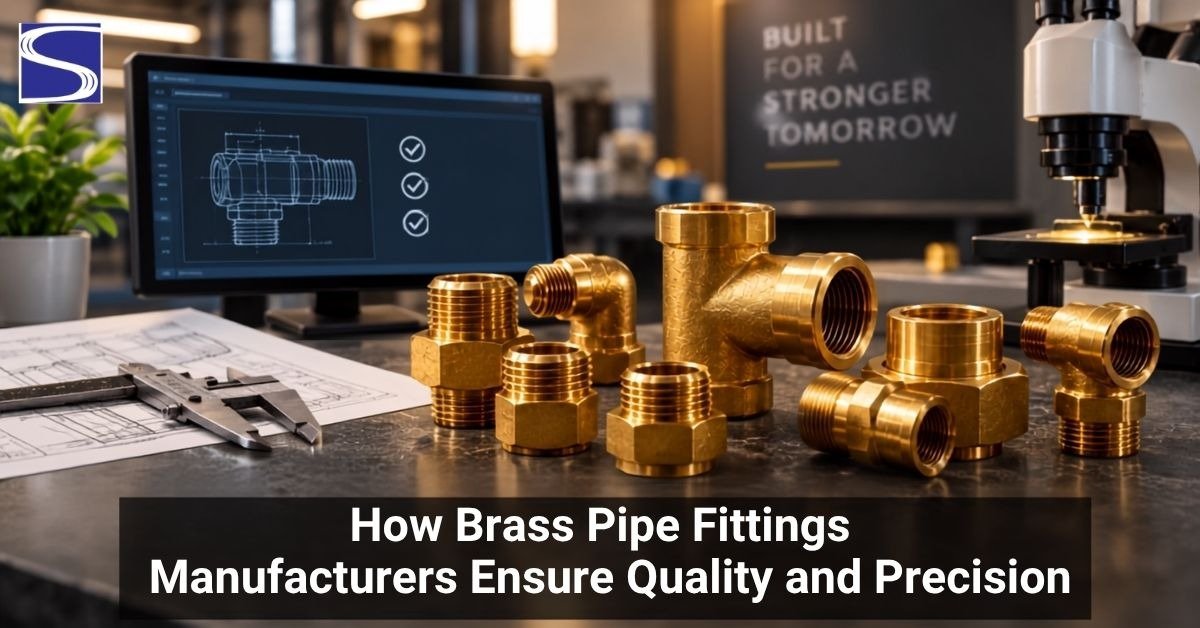
Introduction
When a batch of fittings fails a pressure test at the buyer’s end, the cost is never just the returned goods—it’s the relationship. This shows why serious buyers examine how Brass Pipe Fittings Manufacturers control quality on the shop floor, not just what is offered in the catalog. Each step of the process either builds trust or breaks it, from the testing of raw materials to final dimensional measurements. A Brass Nut is one example of a precision component where material quality and accurate machining can directly affect performance. This guide walks through the real practices that separate dependable manufacturers from the rest, so you know exactly what to check before placing your next order.
Why Quality Control Starts Before the First Cut
Good fittings aren’t fixed at the inspection stage—they’re built in from the start. Brass Pipe Fittings Manufacturers understand that if the raw brass is inconsistent, no amount of machining afterward will correct it.
That’s why the strongest manufacturers treat material sourcing as seriously as production itself, checking composition and grade before a single component is cut or threaded—a discipline covered in more depth in our guide on Brass Piping and Fittings.
How Brass Pipe Fittings Manufacturers Control Raw Material Quality
Reliable manufacturers don’t accept raw brass on trust. Every incoming batch of copper-zinc alloy goes through composition checks to confirm it matches the required grade for the application, whether that’s plumbing, gas lines, or industrial piping.
Things That Are Checked Before Making It
- A copper-to-zinc ratio check is performed.
- We calculate the sum total of years all our (traced) samples have been stored.
- Test samples of tensile strength and hardness have been taken.
- Inspection of the surface for defects.
- Supplier’s certification and batch traceability.
Generally, problems begin when one of these steps is skipped. As an example, a slightly incorrect ratio of the alloy can lead to a loss of corrosion resistance of the fitting after it is installed months later.
Precision Engineering: What Sets Top Brass Pipe Fittings Manufacturers Apart
Once the material passes inspection, precision becomes the next battleground. Modern manufacturers rely on CNC machining to hold tight tolerances across large production runs, not just on the first sample piece.
CNC Machining and Tolerance Control
CNC turning and threading allow manufacturers to repeat the same dimensions thousands of times without drift, a process explained step-by-step in our guide on How Is Brass Manufactured. This matters because a fitting that’s slightly off-thread on piece one might still work—but by piece 5,000, that small deviation can mean leaks or failed assembly at the buyer’s site.
Consistency Across Brass Pipe Fittings Parts
Different fittings—elbows, tees, couplings, unions—each carry their own tolerance requirements depending on pressure rating and application. A manufacturer worth working with tests each part type separately rather than applying one blanket quality standard across the board.
The Role of Brass Pipe Fittings Suppliers in Consistent Quality
Manufacturing precision only matters if it survives the journey to the buyer. Packaging, documentation of batches, and honest communication about lead times set the great Brass Pipe Fittings Suppliers apart from the rest.
A reliable supplier goes beyond the shipping of inventory. They identify issues before shipping and keep quality records to document the integrity of each batch to identify the source of a potential quality issue.
We’ve found that customers of established Brass Pipe Fittings Suppliers can come to anticipate the consistency of their orders. This is because the same alloy grade and finishing process get used batch after batch.
Importance of Understanding Brass Pipe Fittings HSN Code and Compulsory Compliance
It is not only the physical product that matters; documentation is also important. Having the correct brass pipe fitting HSN code on your invoices can save a lot of hassle during customs checks by preventing GST discrepancies and audit-related disputes.
Most brass pipe fittings correspond to HSN codes belonging to the 7412 or 7419 range, depending on whether the product falls under the classification of a copper alloy tube/pipe fitting or a miscellaneous brass article. Buyers should always confirm the exact code with their supplier or a customs broker rather than assuming it stays the same across product variants.
Manufacturers who get this right upfront save their clients real time—an incorrect classification on paperwork can hold a shipment at port for days.
Common Brass Pipe Fittings Parts and Quality Checkpoints
Not every fitting needs to meet the same standard, but every fitting needs a standard. Here’s a quick breakdown of common components and what buyers should ask about for each:
- Elbows and tees—check wall thickness consistency around bends
- Couplings and unions—verify thread engagement and sealing surface finish
- Nipples and adapters—confirm dimensional accuracy at both ends
- Reducers—check for smooth transition without weak points
- Plugs and caps—test for proper seating and leak resistance
Asking for test certificates on these fittings, rather than a verbal assurance, is one of the simplest ways to protect a bulk order.
How to Identify Reliable Brass Pipe Fittings Manufacturers
Just because two catalogs look similar, it doesn’t mean two suppliers are the same. What makes a reliable supplier is often something shared:
- They provide a material test certificate without asking twice
- They give small samples and let you place a bulk order only after they are satisfied.
- They let you choose which machining process you want to use and what tolerances you want to give.
- They have a quality system that has been ISO certified.
- They answer your questions, technical or not; instead of just assuring you
To know the production processes these manufacturers use, what we’ve written in our blog should explain the alloying and finishing processes in detail. The Britannica article, Brass Manufacturing, is also a good external reference.
Sourcing Wholesale Brass Pipe Fittings Components for Bulk Orders
Buyers scaling up procurement often move toward bulk sourcing to reduce per-unit costs and simplify logistics. But this only pays off if quality holds steady across the full order, not just the first sample batch.
Expect more from vendors and ask for consistency across batches rather than an affordable quote when sourcing in bulk. A manufacturer who can hold tolerance on a 500-piece trial order but drifts by piece 5,000 isn’t actually offering wholesale Brass Pipe Fittings components reliability—just wholesale pricing.
Working with a manufacturer who supplies these components directly, rather than through multiple trading layers, also makes it easier to trace quality issues back to their source if something goes wrong.
Conclusion
Brass fitting quality is not the outcome of a singular test. It is the overall combination of testing brass in its raw form, machining, preserving relevant process documentation, and ensuring shipment readiness. Clients that understand the mechanism involved in the Brass Pipe Fittings Manufacturers Process are better prepared to avoid the not insignificant pitfalls associated with supply. Having the right questions asked prior to placing a small sample order and even prior to placing large bulk orders is critical in saving time and money, and reducing order-related anxiety.
Frequently Asked Questions
Look for material test certificates, ISO certification, willingness to offer trial orders, and clear communication about tolerances and finishing processes.
Most brass pipe fittings fall under HSN 7412 or 7419, but the exact code depends on the specific product type—always confirm with your supplier or customs broker.
Request test certificates for wall thickness, thread engagement, and sealing performance, and consider a small trial order before committing to volume.
Manufacturers produce the fittings and control machining quality directly, while suppliers manage distribution, packaging, and delivery—working with both transparently matters for consistency.
Yes, generally, but savings only hold up if quality stays consistent across the full order—always verify batch consistency before scaling up.