
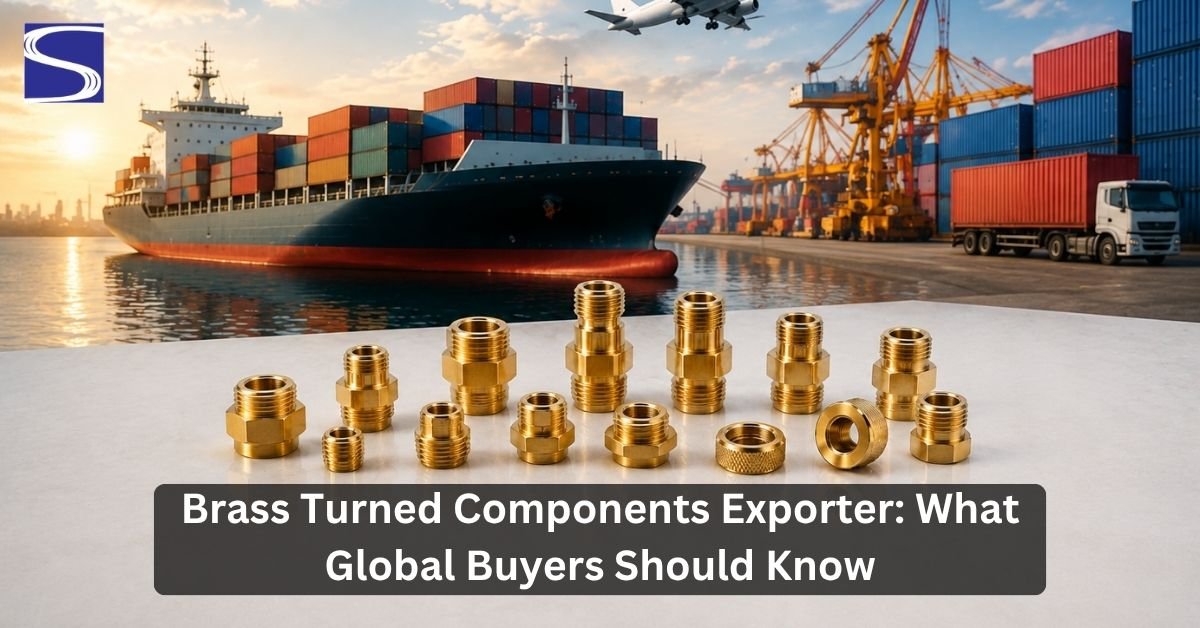
Picking the right brass turned components exporter is usually the one decision that makes or breaks an overseas sourcing deal. Not the price. Not even the lead time, at least not directly. If you are a procurement manager in Europe or a distributor in the Middle East, this is the call that decides whether your supply chain runs smoothly or gives you headaches every few months. Here is what actually matters when you are vetting a partner in India, and how the export side of things really works.
Why International Buyers Choose a Brass Turned Components Exporter
Brass turned parts end up in electrical fittings, plumbing systems, automotive assemblies, precision instruments, the kind of applications where a dimensional error of half a millimetre can throw off an entire assembly line. A dependable brass turned components exporter cuts that risk down by pairing consistent machining with proper export documentation on every single shipment, not just the big ones.
India, Jamnagar in particular, has quietly built a name for itself in this space over the last few decades. Buyers keep coming back to the same handful of suppliers, and it is rarely about the lowest quote. It comes down to whether the shipment lands on time and whether what was ordered is actually what shows up.
Paperwork trips up more first-time buyers than the manufacturing itself does. Get the brass HSN code wrong on an invoice and the shipment can sit at customs for days while everyone scrambles to fix it.
Brass Turned Components Buyers in Europe: Key Factors to Consider
For brass turned components buyers in Europe, choosing the right manufacturing partner involves checking quality standards, export experience, and the ability to meet specific industry requirements. European buyers often look for suppliers who can provide consistent precision, reliable documentation, and customized solutions for different applications.
Working with experienced exporters helps brass turned components buyers in Europe maintain smooth supply chains and reduce sourcing challenges. Factors such as material quality, machining accuracy, compliance with international standards, and communication support play an important role when selecting a long-term supplier.
What to Look for Before You Choose an Exporter
Not every workshop that machines brass is set up to handle an international order. A handful of checks upfront saves you months of back-and-forth later.
Manufacturing Capability
Ask what machines they actually run. CNC turning centres hold tolerances that manual lathes just cannot match, and that gap shows up the moment a part needs to fit into an assembly without someone filing it down by hand.
Quality Certifications
ISO certification, material test certificates, a real inspection process on paper, not just a verbal promise. Buyers who skip this step usually find out the hard way, once the container has already landed and the parts are out of spec.
Pricing Transparency
A supplier worth working with tells you upfront what tooling, packaging, and freight will cost. If those numbers keep shifting after you have placed the order, that is a red flag worth paying attention to.
A quick checklist before you commit to anyone:
- Ask if they have shipped to your specific country before, not just “internationally”
- Get sample parts before you commit to a bulk run
- Verify the material certificate matches the brass grade you actually need
- Find out what lead times look like in peak season versus the slow months
- Check the packaging is built for weeks at sea, not just a domestic delivery
- Confirm payment terms match how trade normally works, not something unusual
- Ask what happens if a batch gets rejected on arrival
How to Export Brass Turned Components: A Simple Overview
For anyone new to sourcing out of India, understanding how to export brass turned components mostly comes down to managing expectations early. It starts with a technical drawing review, moves to sample approval, and only after that does bulk production actually begin.
Once the parts are made, the exporter takes over documentation, the commercial invoice, packing list, certificate of origin, and everything else that has to travel with the shipment.
People tend to assume this is purely a shipping problem. It is not. A wrong classification code is one of the most common reasons a shipment gets flagged for review, and freight forwarders can only catch so much. The paperwork is on the exporter to get right.
Brass Turned Exporter in India: Why Jamnagar Leads the Industry
Jamnagar has been machining brass for generations at this point, and a brass turned exporter in India based there usually has something newer clusters do not: skilled machinists who grew up around this trade, raw material suppliers already down the road, and export infrastructure that just works.
That density of experience is part of why lead times out of Jamnagar tend to run shorter, and why custom specs get handled without much drama. Our brass turned parts range grew out of exactly this, covering electrical, plumbing, and industrial specs with tooling already set up for most of the common sizes buyers ask for.
Wholesale Brass Turned Components: Options for Bulk Buyers
Buyers ordering large or recurring volumes usually want a standing arrangement rather than negotiating from scratch every time. Makes sense, especially for distributors and OEMs whose demand shifts with the season and who cannot afford to wait around for a fresh quote each time.
A wholesale brass turned components arrangement generally looks like this:
- Pricing locked in for an agreed period
- Repeat clients get priority on the production schedule
- Reordering against saved specs, no need to start over
- Better per-unit pricing once volume crosses a certain point
This kind of setup only really makes sense once a smaller trial order has already proven the quality holds up.
Practical Tips for First-Time Buyers
A few habits go a long way here. Always ask for dimensional reports alongside the sample, photos alone do not tell you much. If a factory visit is not realistic, request a video of the actual production line instead. And pad your first order with extra lead time, because both sides are still figuring out how the other communicates.
India’s growing footprint in global supply chains has been written about plenty, and this piece on Brass Component Supply gets into how the country earned that trust with buyers overseas in the first place.
Buyers who slow down and actually vet a supplier rarely end up regretting it, even when the process feels tedious in the moment.
Conclusion
Choosing the right brass turned components exporter really comes down to a short list: machining that holds up batch after batch, documentation that is actually correct, and a supplier who tells you about a problem before it becomes your problem. Whether you are testing the waters with a small sample order or scaling into wholesale volumes, none of that changes. Check credentials, ask the uncomfortable questions early, and start small before you commit to a long-term partnership with any brass turned components exporter.
Quality checks, export paperwork, transit-ready packaging, and coordinating with freight forwarders on your behalf.
Start with a drawing review and sample approval, then confirm your country’s documentation needs before bulk production starts.
Direct usually means better pricing and fewer messages lost in translation, though an agent helps if import rules confuse you.
It depends on the part and the exporter, but most suppliers will confirm an MOQ once they see your drawings.
Usually one to three weeks, depending on how complex the part is and how busy the production line already is.