
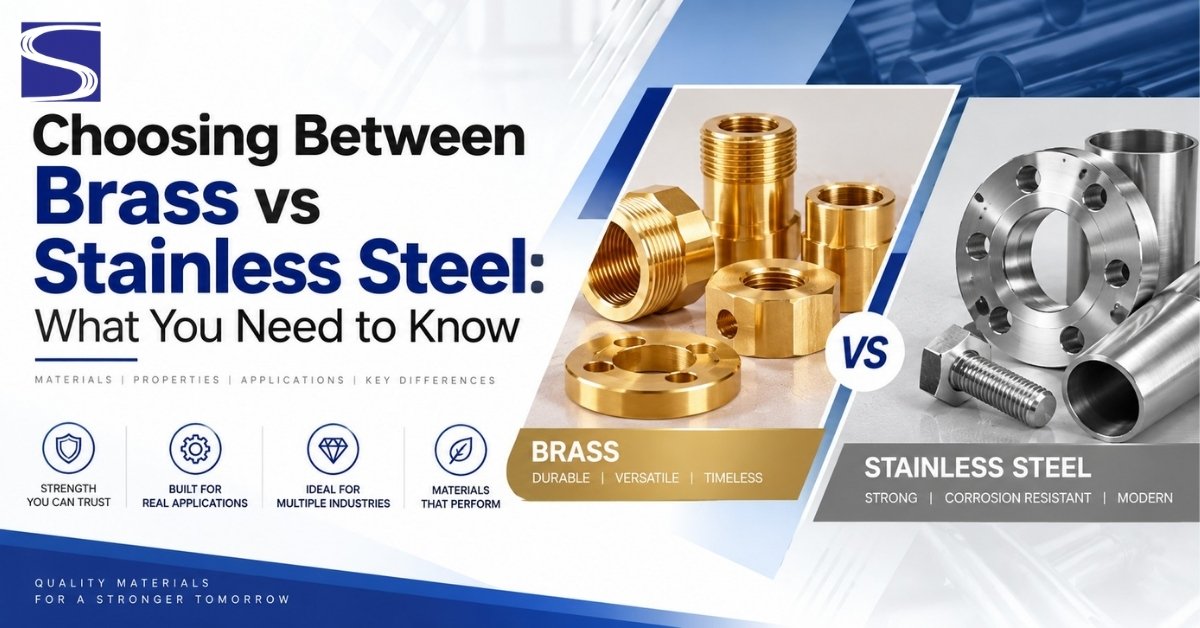
Anyone specifying metal components eventually runs into the same fork in the road. Do you go with brass or do you reach for stainless steel? The question sounds simple until you’re staring at a bill of materials with a deadline attached, and the two metals behave differently enough that guessing wrong costs real money later. I’ve seen procurement teams flip-flop between the two mid-project just because nobody laid out the actual differences up front. This piece walks through the practical differences so the decision gets easier, not harder, using the numbers that actually matter rather than vague impressions about which metal “feels” more premium.
Brass vs Stainless Steel comparisons show up constantly in manufacturing forums, procurement calls, and engineering reviews, and for good reason. Both metals show up in valves, fittings, marine parts, and architectural hardware, yet they come from completely different families. Brass is a copper-zinc alloy. Stainless steel is an iron-based alloy with chromium mixed in for corrosion resistance. That single fact explains most of what follows.
What Makes Brass vs Stainless Steel So Different
Composition is where the split really starts. Brass typically runs 60 to 70 percent copper with zinc making up the rest, sometimes with small amounts of lead or tin added for machinability. Jamnagar in Gujarat has built an entire industrial identity around this alloy, and a closer look at how Brass City of India earned that title shows just how central brass production has become to that region’s manufacturing base.
Stainless steel takes a different path entirely. Iron forms the base, chromium sits between 10.5 and 20 percent depending on the grade, and nickel or molybdenum often gets added for extra corrosion protection in aggressive environments. The chromium content forms a passive oxide layer on the surface, which is the whole reason stainless steel resists rust the way it does. Brass resists corrosion too, but through a different mechanism tied to its copper content rather than a chromium film.
brass vs steel strength: How the Two Metals Hold Up Under Load
Strength comparisons get thrown around loosely, so it helps to separate tensile strength from hardness and from fatigue resistance, because a metal can win on one and lose on another. On raw brass vs steel strength numbers, stainless steel generally comes out ahead. Common stainless grades like 304 or 316 offer tensile strength in the range of 70,000 to 90,000 psi, while typical brass alloys sit closer to 40,000 to 55,000 psi.
stainless steel vs brass in Corrosion Resistance and Manufacturing
Manufacturing method shapes a lot of what each metal is good for. Anyone curious about the exact process behind How Is Brass Manufactured will find that brass casts and machines with far less resistance than steel, which is exactly why plumbing fittings, musical instruments, and precision components lean on it so heavily. Stainless steel takes more energy and more tool wear to shape, largely because chromium hardens the alloy in ways that make cutting and forming genuinely harder work for a machine shop.
On the stainless steel vs brass corrosion question, the answer depends entirely on environment. Brass handles fresh water and mild atmospheric exposure well, and its natural antimicrobial property makes it a common choice for fixtures that get touched constantly. Stainless steel pulls ahead in marine, chemical, and high-humidity settings where chloride exposure would eventually pit a brass surface. Neither metal is universally better here; the surrounding conditions decide the winner.
A few differences show up consistently once you start comparing samples side by side on a shop floor:
- Brass machines faster and produces cleaner cuts with less tool wear.
- Stainless steel resists scratching and surface damage better over time.
- Brass develops a natural patina that some designers specifically want.
- Stainless steel keeps a uniform finish across large production runs.
- Brass conducts heat and electricity noticeably better than stainless grades.
Brass vs steel weight: Which Metal Feels Heavier in Hand
Pick up a brass fitting and a stainless steel fitting of the same size, and the difference registers immediately. That’s not an illusion. Brass vs steel weight comparisons come down to density, and brass simply packs more mass into the same volume.
Brass density runs around 8.4 to 8.7 grams per cubic centimeter depending on the exact alloy. Standard stainless steel sits closer to 7.9 to 8.0 grams per cubic centimeter. So is brass heavier than steel? Yes, on a like-for-like volume basis, brass is the heavier metal, though the margin is smaller than most people expect before checking the actual numbers. Anyone weighing identical castings on a scale for the first time is usually surprised the gap isn’t bigger, given how different the two metals feel when handled.
That density gap is one of the clearest Brass vs Stainless Steel signals available without lab equipment. Pick up a doorknob, a valve handle, or a decorative fitting, and a trained hand can often guess the material correctly just from the heft alone, long before checking a spec sheet or a material stamp.
Breaking Down the Density Numbers Between the Two Metals
The direct answer to is brass heavier than stainless steel is yes, and the gap holds across most common alloy grades on either side. A brass part will typically run somewhere between 5 and 10 percent heavier than an identical stainless steel part, which sounds minor until you’re shipping pallets of fittings and the freight bill reflects every extra kilogram.
This is why brass vs steel weight decisions matter more in aerospace, automotive, and anything shipped in volume, where mass adds up fast across thousands of units. For a single decorative handle or knob, nobody notices the difference. For a production run of valve bodies, the weight gap turns into a real logistics and cost line item. Is brass heavier than steel stops being a trivia question and becomes a spreadsheet input once volume enters the picture.
brass vs stainless steel cost: What Actually Drives the Numbers
Cost tracks the London Metal Exchange more closely than most buyers expect. Brass vs stainless steel cost comparisons shift month to month because copper and zinc, the two components of brass, trade independently on global commodity markets, and both can swing sharply based on demand from construction and electronics manufacturing.
Stainless steel carries its own cost drivers, mainly nickel and chromium content, and grades with higher nickel percentages run noticeably more than basic chromium-only stainless. On average the balance tends to favor brass for smaller cast components, while stainless steel often comes out ahead per unit weight on large structural pieces, though this flips depending on the specific grades being compared and the current state of commodity markets. Buyers who track both metals over a full year usually notice brass swinging harder in either direction, simply because copper is more volatile than the iron ore feeding stainless production.
|
Property |
Brass |
Stainless Steel |
|
Base Metals |
Copper + Zinc |
Iron + Chromium |
|
Density |
8.4–8.7 g/cm³ |
7.9–8.0 g/cm³ |
|
Tensile Strength |
~40,000–55,000 psi |
~70,000–90,000 psi |
|
Corrosion Resistance |
Good in freshwater/atmosphere |
Excellent, especially marine grades |
|
Machinability |
Excellent |
Moderate |
|
Common Uses |
Fittings, fixtures, decorative parts |
Structural parts, marine hardware |
which is better, brass or stainless steel for Your Application
There’s no single answer to which is better, brass or stainless steel, and anyone promising one is oversimplifying. A related comparison worth reading is Brass vs Copper, since understanding how brass differs from its own parent metal helps clarify why it behaves so differently from an iron-based alloy like stainless steel in the first place.
For indoor plumbing, decorative hardware, and components needing fast machining, brass usually wins. For outdoor structures, marine equipment, and anything facing chemical exposure, stainless steel is the safer call. Which is better, brass or stainless steel really depends on load requirements, environment, and how the finished part will actually be used day to day.
Procurement teams running a Brass vs Stainless Steel evaluation on a new product line often end up specifying both, using each metal where its strengths actually apply rather than forcing one material across an entire assembly. A valve body might stay brass while its mounting bracket switches to stainless, and that kind of mixed specification is more common in real production runs than a lot of buyers initially assume.
Why the Weight Difference Actually Matters in Design
Design engineers weigh is brass heavier than stainless steel against structural requirements constantly, especially in aerospace and transportation work where every gram affects fuel efficiency and handling. A heavier stainless steel vs brass comparison isn’t always a downside though; sometimes that extra mass in brass contributes to vibration dampening in mechanical assemblies, which stainless steel doesn’t offer to the same degree.
Is brass heavier than steel also affects handling during manufacturing itself. Heavier stock requires sturdier tooling and fixtures, and shipping costs for raw brass rod or bar stock run higher than equivalent stainless steel volumes purely because of that density gap discussed earlier.
Buyers tend to weigh a consistent set of factors before settling on either metal for a given project:
- The environment the part will sit in long-term, indoor versus outdoor or marine
- Mechanical load and whether structural strength is actually required
- Machining volume and how fast the shop needs to turn parts around
- Appearance requirements, since brass ages differently than stainless steel
- Total shipped weight across the full production run
Practical Guidance: Choosing Between Brass vs Stainless Steel
Component suppliers who work across both metals often end up building precision parts for both categories side by side. Manufacturers producing Precision-Machined Components regularly switch between brass and stainless stock depending on what a given customer’s application calls for, which says something about how situational this decision really is rather than one metal being objectively superior.
The honest takeaway is that brass vs steel strength, weight, corrosion behavior, and cost all pull in different directions depending on the job. Match the metal to the environment and the mechanical demands first, then let manufacturability and budget settle the final call.
Conclusion
Brass vs Stainless Steel isn’t really a contest with one permanent winner. Brass brings faster machining, better conductivity, and a warmer look that plenty of designers still prefer. Stainless steel brings raw strength and corrosion resistance that brass can’t match in harsh environments. The right choice comes down to where the part lives, what it needs to survive, and how it needs to perform, not which metal sounds more premium on a spec sheet.
FAQs
Q1: Is brass heavier than stainless steel in every alloy grade?
Generally yes, though the exact margin shifts slightly depending on which specific brass and stainless grades are being compared.
Q2: Does stainless steel always outperform brass on strength?
In raw tensile numbers, usually, but brass still holds up fine for low-stress fittings and decorative applications.
Q3: Which metal costs less overall?
It depends on current commodity markets and part size; brass often costs less for small cast pieces, stainless can cost less per unit weight on large structural runs.