
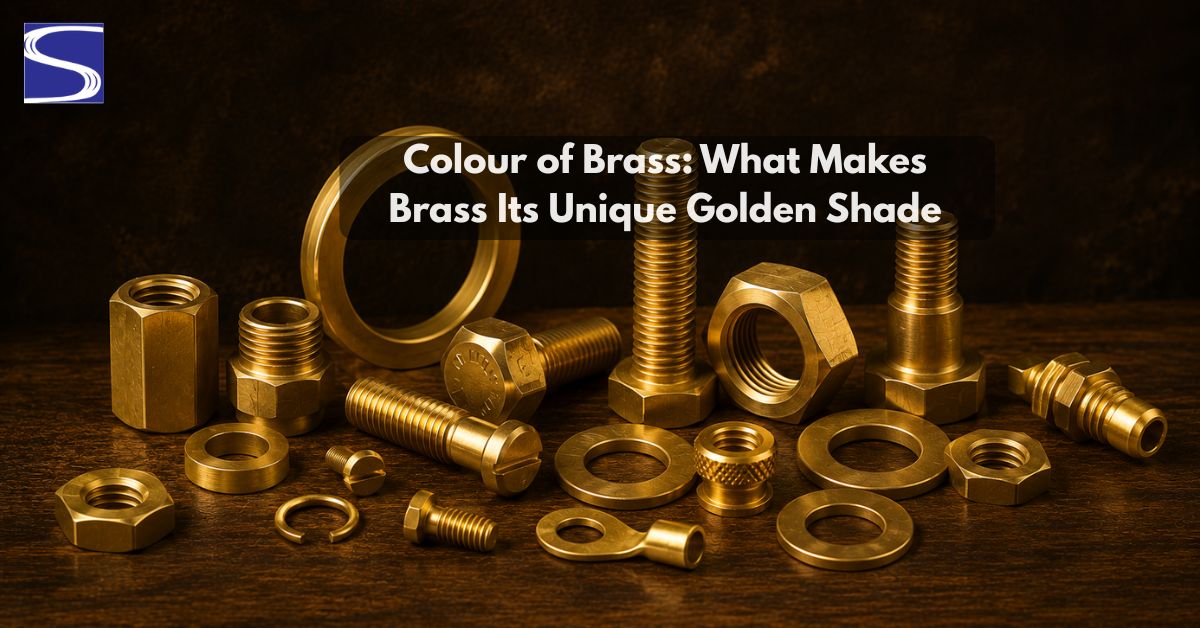
Brass is a well-known and well-liked metal. People are familiar with its golden yellow colour, which is a mixture of orange and yellow hues. As with every element and compound, questions arise about the colour. What causes the colour of brass? Why does the colour change over time? This blog aims to answer these questions.
What Is the Colour of Brass?
Brass colour is a mixture of yellow and gold. As a result of the composition of the alloy, it has the potential to change its hue. The colour of brass may take on a reddish-gold or a pale, silvery-yellow hue or in many instances, appear yellow with warm undertones with hues of orange and green.
Those bright warm colours of brass are the colours people see in door handles, musical instruments, decorations, fittings and hardware.
Why Does Brass Have a Golden Colour?
Brass is a Copper and zinc alloy. Copper is a reddish-orange and its hue mixes with a grey or white zinc to create a golden hue. Thus, brass has a golden colour.
Control is the name of the game. How does the zinc percentage control the colour of brass?
- 70-80% copper content yields a brass colour that is more red and orange toned.
- A 60% copper and 40% zinc ratio gives a bright, classic golden yellow.
- Brass colour with greater than 40% zinc shifts to pale silvery-yellow.
- Brass colour can deepen, dull, and change through the addition of tin, lead, or aluminium.
- Brass colour and tone can be darkened or made more consistent through manganese and nickel in special alloys.
- Brass is notoriously difficult to pin down to a single colour. This is due to the different shades in every alloy grade. Manufacturers adjust the alloy based on the end-use requirements in terms of colour and corrosion resistance, as well as electrical conductivity and machinability.
You can view brass alloy components in a range of industries by viewing these brass pins.
Add Your Colour Brass vs. Natural Brass: Surface TreatmentsText Here
Most brass seen in products is not in a natural state. Colour change treatments result in a significant colour change for brass. Manufacturers rely on a combination of platings, lacquers, and chemical finishes to achieve desired surface treatments.
Common surface finishes include:
- Antique brass finish – an intentionally darkened, aged finish
- Satin brass – a toned, muted, brushed version of the standard gold tone
- Polished brass – a highly reflective, bright, and mirror-like gold finish
- Oil-rubbed brass – used in fixtures and furniture, a darker finish with brown undertones.
- Unlacquered brass – oxidises naturally, allowing the finish to change over time.
With the exception of the last one, these finishes all change in the same way based on the base metal. When the colour of brass changes based on the alloy and finish used, the correct answer to the question, “what color is brass?” is, “it depends.” When a specific color of brass is needed across batches, the supplier chosen matters. A supplier of High-Quality Brass is the best option.
How Does Brass Change Colour Over Time?
This is the interesting part of brass. Untreated brass will be exposed to air and moisture and will oxidise. A patina will form as copper in the alloy reacts with oxygen and moisture, and a greenish, brownish, or dark coating will be seen.
| Stage | Appearance | Cause |
|---|---|---|
| Fresh / Polished | Bright golden yellow | Clean copper-zinc surface |
| Early oxidation | Slightly dull, darker gold | Copper oxide forming |
| Patina development | Greenish-brown coating | Copper carbonate buildup |
| Full patina | Dark brown or green | Long-term exposure |
Some clients order patina because it provides a characteristic finish to antiques and vintage items. Other clients order finishes that allow the original colour of the brass to be retained, which is accomplished with regular cleaning and lacquering.
What Is the Colour of Brass in Industrial and Decorative Use?
Brass’s golden hue provides a marketing advantage. Natural colouration is part of the appeal among many brass products, such as hardware, valves, and musical instruments, as well as among jewellery components and fittings.
However, industrial buyers look beyond the colouration and examine alloy grade. For industrial buyers, the visual appearance of the brass product is secondary if the product meets the performance requirements. For decorative products, such as brass door handles and fixtures, color choices are of considerable importance. Designers typically indicate the shade, and manufacturers have a variety of finishes.
With the proper maintenance, the appearance of brass can be kept. This guide includes some of the most common brass maintenance questions, such as how to clean brass to preserve the plating and damage the finish as little as possible.
Factors That Affect Brass Colour in the Final Product
The colouration of brass can be rendered in several ways in a finished product. Knowledge of these ways assists designers and engineers in the selection of the appropriate material.
- Manufacturing methods — brass that has been rolled, cast, or extruded will reflect light in different ways.
- Plating or surface treatment applied post-production
- Exposure to environmental conditions – humidity, chemicals, or coming into direct contact with other metals.
- Age and the environment in which the item was stored, both before and after installation
These factors must be accounted for during the production and processing of brass. The process impacts surface properties, and for more detail on the many ways brass can be processed, consider looking at different methods of how brass is manufactured from raw material to component.
Does Alloy Grade Affect the Colour of Brass?
Yes, notably. For various applications, different alloy grades (which determine alloy colour) are used. Cartridge brass, which has a copper percentage of 70%, looks the most golden. brass metal colour, which contains tin, is a few shades darker. Free-cutting brass, which is used for a lot of machine work, has an optimal copper-to-zinc ratio and therefore has an overall bright yellow colour.
When placing an order for a material, always check the alloy grade and finishing specifications. A common mistake when ordering brass is to assume all brass is homogeneous and neglect to specify other grades, which can result in large inconsistencies to the final product’s overall appearance. The stage at which coloured brass is manufactured has a direct impact on appearance.
Conclusion
Brass can be many different shades, from a pale yellow to reddish gold to brown and every color in between. Copper gives brass a warm quality, and zinc a cool quality. The surface treatment also gives brass a range of finishes, and oxidised brass changes all of that.
Brass is not one single shade, but a family of warm golden tones that no other common metal quite replicates. That’s what makes brass recognisable. Whether you are sourcing raw alloy, buying finished hardware or trying to match an existing fixture, knowing what creates the brass metal colour will help you make better decisions every time.
FAQ
The colour of brass is a golden yellow.
Brass oxidises when in contact with moisture and the air. Over time, the copper in the alloy reacts with the environment to form a patina, changing the surface from gold to brown or green.
No, there are different shades of brass, even with the same base composition, due to the many different alloy grades and surface finishes and the many different processes for manufacturing.