
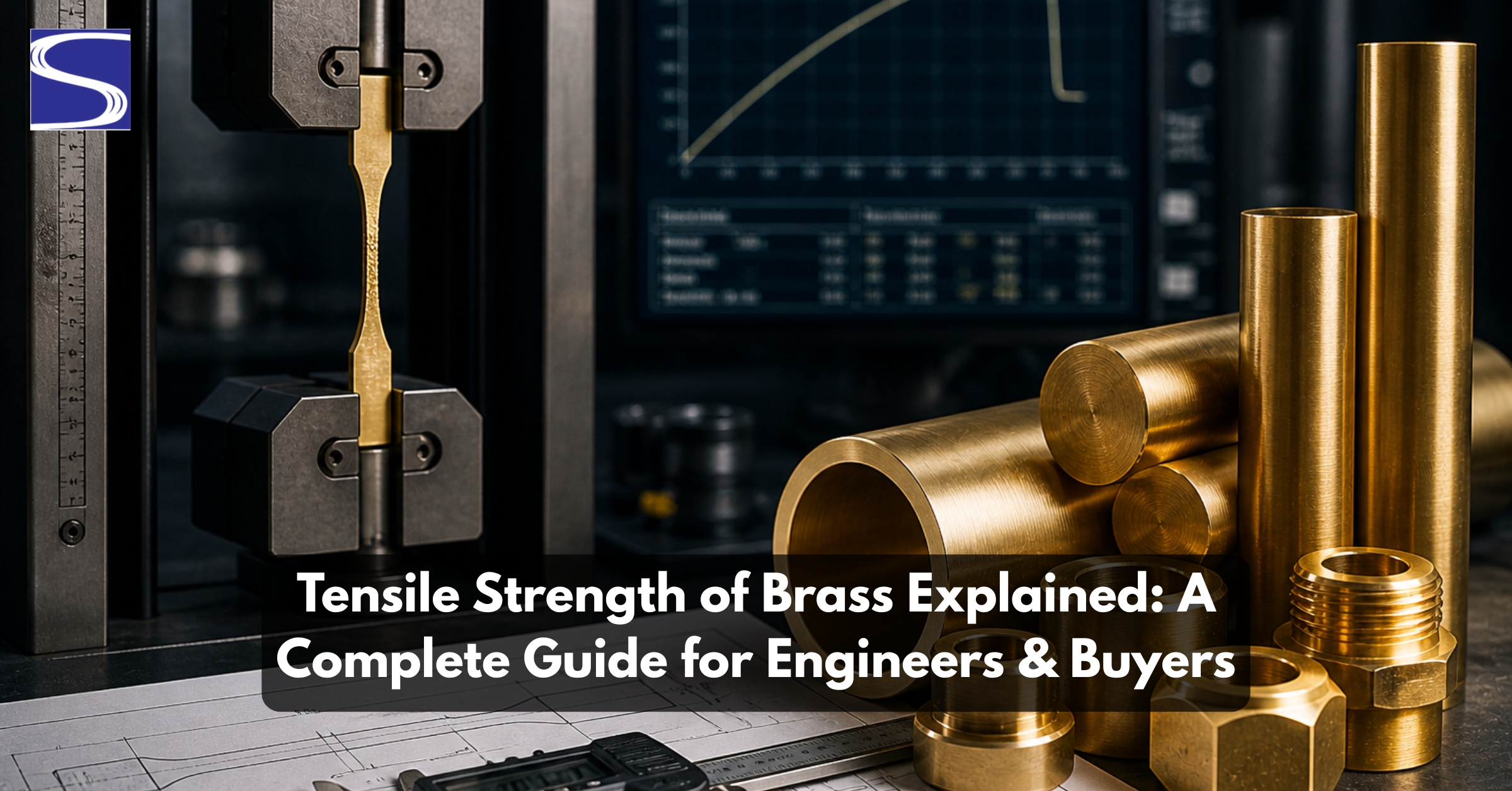
Brass is often used for parts and finishes in industry, such as connectors, valves, and fittings. When choosing the best metal for a particular job, it is important to understand the tensile strength of brass. Brass is a strong metal. It is highly machinable and exhibits good corrosion resistance as well. When the appropriate finish is selected, the customer can reduce the part’s stress and improve the performance of the overall product. The tensile strength of brass can be highly useful to engineers and buyers alike.
Brass is designed to be what it is; however, brass of different types have different tensile strengths. From free-cutting, tin, and cartridge brass, the three common types of brass each have specific tensile strengths. These define their applications.
What Is Tensile Strength of Brass?
An important first step to understand brass’ versatility is generally to understand the meaning of tensile strength (MPa or psi). It is also important to understand the hierarchy of brass grades and the variation of tensile strength in each step of the brass hierarchy. The term “brass” encompasses many distinct varieties of metal, from free machining to naval and even cartridge brass.
Brass is a copper-zinc alloy, and its strength changes significantly depending on the following:
- the Zinc percentage
- the presence of elements like lead, tin, or aluminum
- the methods of heat or cold-working
- the methods of casting, extrusion, or forging
Knowing what is tensile strength of brass is important for buyers in order to ensure the correct grade. With the proper grade, engineers can produce parts that work as expected and last.
Key Brass Mechanical Properties
There are general aspects of brass mechanical properties that can be considered before breeding down into the specific values:
Tensile Strength
This is the amount of load brass can withhold per unit area before failure. It establishes the performance of brass in high-stress environments.
Yield Strength
The brass yield strength is when brass first begins to deform. Components are conditioned to operate below this yield strength in order to maintain alignment. Yield strength in brass can range between 70 and 450 MPa based upon the alloy and the temper.
Elongation
Elongation provides a measure of the amount of stretch a brass can take before it fails. The greater the elongation, the greater the ductility and the higher the regard for the value of brass in forming and in bending operations.
Hardness
The hardness of brass suggests how susceptible brass is to surface indentation and to wear. It tends to match the traits of tensile strength with high correlation; that is, the harder the brass is, the greater the tensile strength. Therefore, it is necessary to understand and track the hardness and the respective tensile values in order to facilitate a sound engineering practice.
Tensile Strength of Brass by Grade
Here are the typical tensile strengths for different grades of brass:
Free-Cutting Brass (C36000)
- Tensile Strength: 340-470 MPa
- Yield Strength: 125-310 MPa
- Applications: Components made of brass by CNC machining (cutting with CNC); brass fasteners; brass fittings; brass hardware; and metal fittings
Naval Brass (C46400)
- Tensile Strength: 370-510 MPa
- Yield Strength: 170-450 MPa
- Applications: Parts and fittings for ships and valves and parts of condensers
Cartridge Brass (C26000)
- Tensile Strength 300-880 MPa
- Yield Strength 75-700 MPa
- Applications: Parts with deep-drawn (deep-drawn) used and made up of brass like brass cartridge casings, parts of heat exchangers
Admiralty Brass (C44300)
- Tensile Strength: 370-510 MPa
- Yield Strength: 140-440 MPa
- Applications: Components for heat exchangers and marine industrial and marine brass fittings
High-Tensile Brass (C67500)
- Tensile Strength 450-700 MPa
- Yield Strength 200-500 MPa
- Applications: Heavy and Durable Components thru Bearings, Gears, and Brass
Factors That Affect the Tensile Strength of Brass
Brass tensile strength relies on several structural and compositional factors:
Zinc Content
Typically, more zinc increases tensile strength up to 45%. More than this, brittle phases form and strength drops.
Cold Working
Rolling, drawing, and/or pressing (also known as cold working) significantly increases brass tensile strength. H/cold-worked brass can be as high as two times the tensile strength of annealed brass.
Annealing
Brass that has not been annealed, is at maximum tensile strength, and is not as ductile. Conversely, it is preferred in applications that involve bending and forming.
Alloying Elements
- Lead: Slightly decreases strength but improves machining
- Tin: Like tin metal, improves strength and decreases corrosion.
- Aluminum: Adds strength and improves resistance to corrosion
Why Tensile Strength Matters for Industrial Buyers
For procurement managers and engineers sourcing brass components, the brass tensile strength specification affects
- How long and how well components can endure progressive mechanical loading
- Establishing the safety working limits of pressure-rated devices (valves, fittings, and couplings)
- Adherence to global industrial standards of materials (ASTM, BS, IS)
- Maintaining consistency in production with controlled rejection and scrap
Selecting an alloy without confirmation of the brass mechanical properties may result in irreversible and expensive losses (components and time).
Conclusion
Engineers can choose the appropriate alloy for each application when they understand the tensile strength of brass, and this knowledge allows buyers to specify materials more precisely. Brass can be used for free-machining grades for low-strength applications up to high-strength tough alloys for heavy applications. It can meet a wide range of industrial requirements.
Saryu Industries manufactures high Quality Brass Solutions for all the appropriate alloy grades with all our products to ensure all the mechanical standards for the related applications. Reach out and discuss the requirements to obtain a material cert.
Frequently Asked Questions
The average tensile strength of the most commonly used brass alloys falls in the range of 300 MPa and 700 MPa, but the brass strength varies depending on alloy metallurgy, zinc percentage, and the extent of cold work.
Definitely. When compared to pure copper, which has a base value of around 200-250 MPa, brass alloys have a lower limit of 300 MPa, meaning that brass is a better material for the design of structural and mechanical elements.
Brass yield strength is the stress level at which brass begins to deform and brass has the greatest tensile strength, or the maximum amount of stress before it breaks. Design of structural elements should be kept always well below yield strength.
Heavily cold-worked cartridge brass (C26000) and High-tensile brass (C67500) can achieve tensile strengths over 600–880 MPa and are appropriate for challenging structural and mechanical functions.