
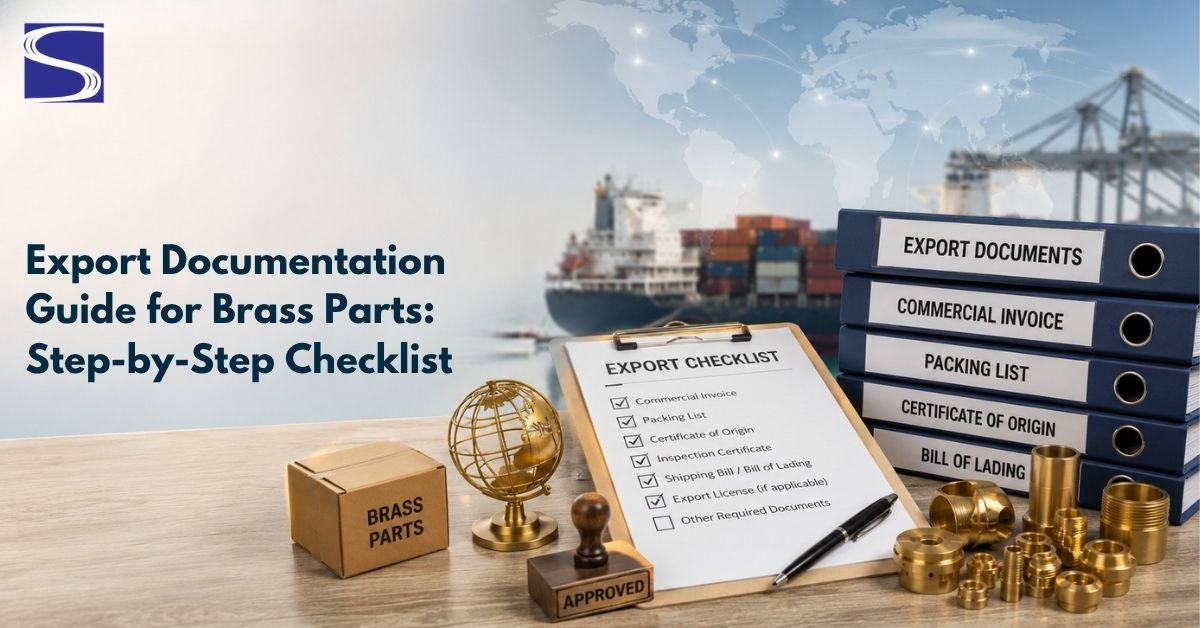
Shipping brass parts overseas looks simple on paper until one missing certificate holds your container at the port for two extra weeks. Export Documentation decides whether your goods move smoothly or get stuck in a customs queue while your buyer keeps calling for updates. This guide walks through the documents you actually need, in the order customs expects them, so your next shipment doesn’t run into avoidable trouble.
Why Export Documentation Matters for Brass Parts
Every brass exporter deals with a different set of rules depending on the buyer’s country, the shipment value, and sometimes even the specific port of entry. A single missing form can turn into demurrage charges, a rejected container, or worse, a buyer who walks away from the deal entirely. Sorting your paperwork correctly the first time protects both your margins and your name in the market.
Precision brass items such as a brass pin often come with extra quality certificate requirements depending on where they’re used — electrical fittings, plumbing systems, or automotive assemblies all have different expectations. Buyers in stricter markets like the US and EU tend to ask for these certificates before they even finalise the order, so keeping them ready in advance saves a lot of back-and-forth later.
The Export Documentation Process for Brass Components
The export documentation process for brass components usually follows a fixed sequence, starting the day an order gets confirmed and ending once the goods clear customs on the buyer’s side. Most delays happen not because a document is missing entirely, but because it was prepared out of order or based on incomplete shipment details.
A standard sequence for a brass parts shipment looks like this:
- Proforma invoice shared and approved by the buyer
- Purchase order or sales contract signed by both sides
- Commercial invoice and packing list drawn up
- Certificate of origin issued through the chamber of commerce
- Bill of lading or airway bill generated once goods are loaded
An error at any one of these stages, like a wrong HS code on the invoice, tends to resurface later during customs clearance and slows everything down.
Import Export Documentation Requirements by Country
Import export documentation requirements change quite a bit from one country to the next. US buyers usually need an Importer Security Filing submitted before the vessel even leaves port, while EU buyers often require an EORI number linked to their businesses. Several Middle Eastern countries also ask for a certificate of origin attested through their local embassy, and that step alone can add a few extra days if you haven’t planned for it.
This is why checking destination-specific rules before locking in your shipping mode saves time down the line. Our post on How to Export from India goes deeper into country-wise requirements, along with how GST and duty drawback schemes apply specifically to brass exports.
Partnering with a freight forwarder who has handled metal component shipments before also helps a lot here, since they usually already know which papers tend to get flagged by customs in a particular country.
Export Documentation Checklist for Brass Parts
A solid export documentation checklist keeps your team from missing a step when multiple orders are moving at once. Here’s a table most brass exporters keep handy for a typical international shipment.
Document | Purpose | Prepared By |
Commercial Invoice | States value and description of goods | Exporter |
Packing List | Lists weight, dimensions, and packaging details | Exporter |
Certificate of Origin | Confirms the country where goods were made | Chamber of Commerce |
Bill of Lading / Airway Bill | Serves as proof of shipment and title to goods | Shipping Line / Airline |
Bill of Entry (Import Side) | Used for customs clearance at the destination | Buyer / Customs Agent |
Along with the table above, these five items are worth keeping ready for a smoother export documentation checklist:
- GST invoice along with LUT or bond details for tax-free exports
- Insurance certificate for higher-value shipments
- Inspection certificate if the buyer wants third-party quality checks
- Fumigation certificate for wooden packaging material
- Bank realisation certificate once the payment comes through
Keeping both digital and physical copies of these documents cuts down on last-minute scrambling when your freight forwarder suddenly asks for one.
Common Mistakes in Export Import Documentation
Export import documentation mistakes usually come down to small details that get overlooked in the rush to ship — a wrong HS code, a mismatched invoice value, or a certificate of origin issued after the goods have already left the port. None of these are hard to avoid once your team knows exactly what customs officers check first.
One mistake that shows up often with brass shipments is misclassifying HS codes between raw alloys and finished components, which directly changes the duty the buyer ends up paying. Working with a manufacturer who understands both production and export compliance, the way Saryu approaches Brass Components manufacturing for overseas markets cuts this risk down significantly because the documentation gets prepared with the destination country in mind right from the start.
Conclusion
Export Documentation for brass parts stops feeling overwhelming once you know the right sequence and keep a checklist ready before every shipment goes out. Getting the export documentation process right, understanding how import export documentation requirements shift by country, and keeping your export documentation updated will save you from delays, added costs, and buyers who lose patience. Treat your paperwork as part of product quality rather than an afterthought, and shipments will move through customs with far fewer surprises.
Frequently Asked Questions
It is the commercial invoice that is most important, as both clearance of customs and settlement of payment depend directly on it.
Yes, most destination nations require it so that they can apply duty benefits under existing trade agreements.
It typically takes three to five working days once your product and shipment details are finalised.