
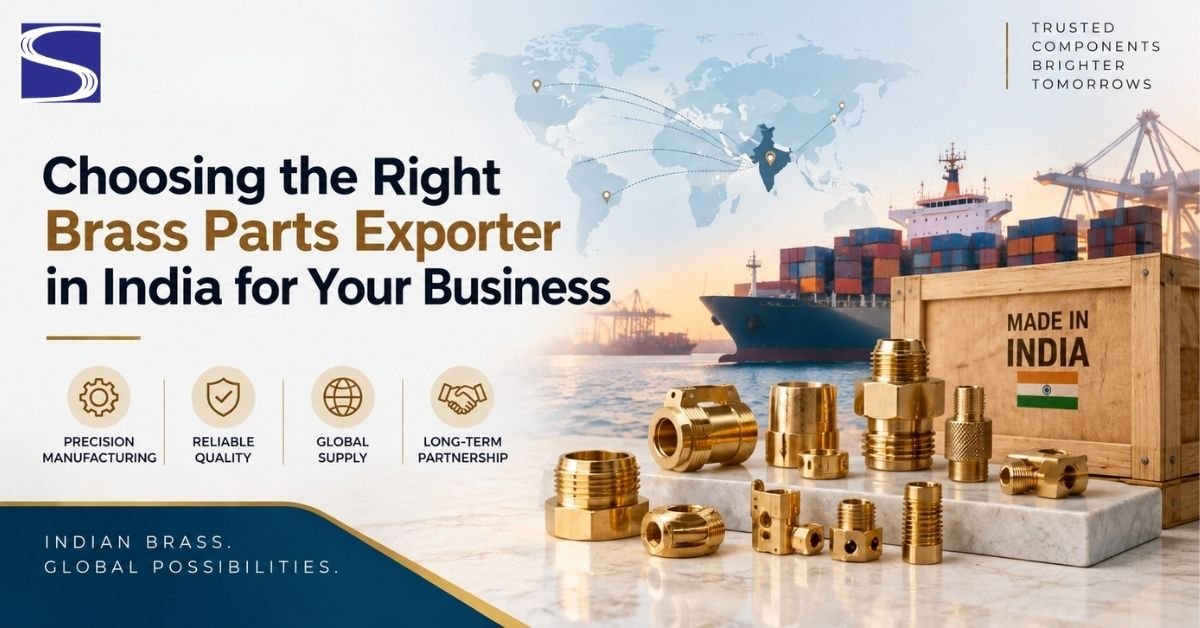
If you manufacture equipment, fittings, or hardware, finding the right brass parts exporter in India is one of the most important sourcing decisions you’ll make. The wrong partner means delayed shipments, inconsistent quality, and constant back-and-forth over specifications. The right one becomes a dependable extension of your production line.
This guide walks you through exactly what to check before you sign a purchase order and why so many international buyers keep coming back to Indian suppliers year after year.
Why Buyers Keep Choosing a Brass Parts Exporter in India
India has been working with brass for centuries, and that experience shows. Cities like Jamnagar have entire industrial clusters built around brass casting, forging, and machining, which means suppliers there have access to skilled labour, established supply chains, and decades of process knowledge that newer manufacturing hubs simply don’t have yet.
Many international buyers now compare more than one supplier before placing their first order, mainly to check consistency in quotes, response time, and sample quality across a few options rather than settling for the first one they come across online. A lot of them end up looking at a Brass Turned Components Exporter too, since turned parts often need a slightly different level of precision than standard cast or forged pieces.
For buyers comparing options globally, a brass parts exporter in India often proves to be more cost-effective without compromising on quality, primarily due to the more favourable access to raw materials and labour costs compared to many Western or East Asian markets.
What to Check Before Choosing a Brass Parts Supplier India
Not every trading company that lists brass items online actually manufactures them. Some are pure middlemen with no factory floor, no in-house testing, and very little control over lead times. Before you commit to a brass parts supplier India, run through this checklist.
- Ask for factory photos or a quick video call showing the actual production floor, not just polished catalogue shots
- Find out whether they run their own manufacturing or outsource to a third party.
- Get material test certificates for the exact alloy grade you’re buying.
- Make sure their minimum order quantity fits what you actually need, not what suits them.
- Ask upfront how tooling costs work if you’re going for custom parts.
- Find out what lead times look like during their busiest export months
- Check whether they’ve shipped to your country before and how that went
If a supplier answers all of this without hesitating or dodging the question, that’s usually a good sign.
It’s also worth asking how they handle communication across time zones, since delayed replies during the sampling stage often carry over into production and shipping later on.
First-time importers especially tend to run into trouble here. A well-known example is Brass Export Guide, which walks through documentation, HS codes, and shipping terms buyers often overlook before placing their first order.
Qualities That Separate Reliable Brass Suppliers in India from the Rest
Not all brass suppliers in India operate at the same standard. The difference usually comes down to a few things buyers can check early, before any money changes hands.
Consistent Quality Control
Good manufacturers test dimensional accuracy, surface finish, and alloy composition on every batch, not just the first sample. Ask specifically how they handle a batch that fails inspection internally, since their answer tells you a lot about their process discipline.
Production Capacity That Matches Your Orders
A workshop can turn out one great sample and still fall apart once you place a real bulk order. Ask about their monthly output and what kind of order volumes they’ve actually handled recently; that tells you a lot more than a sample piece ever will.
Why Communication Matters for a Brass Parts Exporter in India
The good ones give you real answers, exact measurements, tolerances, and timelines. If someone tells you “we can make anything you want” without asking a single follow-up question, take that as a red flag, not reassurance.
How Export from India Actually Works
Understanding the export brass parts process helps you avoid surprises once your order is confirmed. Most shipments follow a fairly standard sequence, though the paperwork can trip up buyers who haven’t done it before.
Once your order is confirmed, here’s roughly how things unfold when you export brass parts from an Indian manufacturer:
- They confirm your purchase order along with the agreed specs and pricing.
- Production gets scheduled, and raw material for your alloy grade gets sourced.
- Parts go through inspection during and after production, before anything gets packed.
- Paperwork gets prepared: invoice, packing list, certificate of origin
- Customs clearance happens, and the shipment gets booked with a freight forwarder.
- From there, it’s just tracking the shipment until it reaches your port or warehouse.
If any part of the process sounds unfamiliar, How to Export from India breaks the paperwork down in plain terms, worth a look before your first shipment goes out.
Common Mistakes Buyers Make When Sourcing Brass Parts India
Even buyers who’ve done this a few times still slip up when sourcing brass parts India, usually because they’re watching the price too closely and not paying enough attention to the process.
Skipping the pre-shipment inspection to save a small fee is a classic one, and it tends to backfire when a container shows up with dimensional problems that cost way more to fix afterwards. Another mistake is assuming any supplier can handle custom tooling when a lot of them are only set up to work the dies and moulds they already have.
Buyers also sometimes overlook communication style. If a supplier takes days to answer simple questions before you’ve even placed an order, that pattern rarely improves once you’re a paying customer.
A third common slip-up is not clarifying packaging requirements early. Brass parts can corrode or scratch during long sea shipments if they aren’t packed properly, so it’s worth confirming exactly how your order will be protected before production even begins.
At the end of the day, the best brass parts exporter in india is the one who treats communication and packaging as seriously as production quality.
What Makes Indian Brass Parts Export Reliable Long-Term
The strongest indian brass parts export relationships aren’t built on a single low-price quote. They’re built on consistency across dozens of orders, where the supplier delivers roughly the same quality and timeline every single time, not just when they’re trying to win your first order.
Buyers who treat sourcing as a long-term relationship, rather than a one-off transaction, tend to get better pricing, faster turnaround, and more flexibility on custom requirements over time.
For manufacturers based in established clusters, checking their standing among other Brass Manufacturers in Jamnagar can give you a useful sense of how they compare on capacity and reputation within the region.
It also helps to speak with a supplier’s existing overseas clients if possible. Most established names in indian brass parts export are happy to share references, since a confident supplier has nothing to hide about how they perform once the sample stage is over.
Conclusion
Choosing a brass parts exporter in india isn’t just about comparing quotes side by side. It really comes down to finding a manufacturer who actually tests their work, gives you straight answers, and can keep up as your order sizes grow. Ask the tough questions early, get their certifications checked, and if you’re still not sure, start small with a trial order before committing to anything bigger. A little diligence early on saves far more time and money than rushing into a large purchase order with an untested supplier.
FAQs
Ask for their factory address, business registration, and export documentation from previous shipments. A genuine manufacturer will share these without hesitation.
It varies widely by product and supplier, from a few hundred pieces for standard items to much higher volumes for custom-tooled parts.
Production plus shipping typically ranges from three to six weeks, depending on order size, customisation, and the destination port.
Often yes, mainly due to lower labour and raw material costs, though pricing still depends heavily on the alloy grade and finishing required.
Standard export documentation includes a commercial invoice, packing list, certificate of origin, and material test certificates for the alloy used.